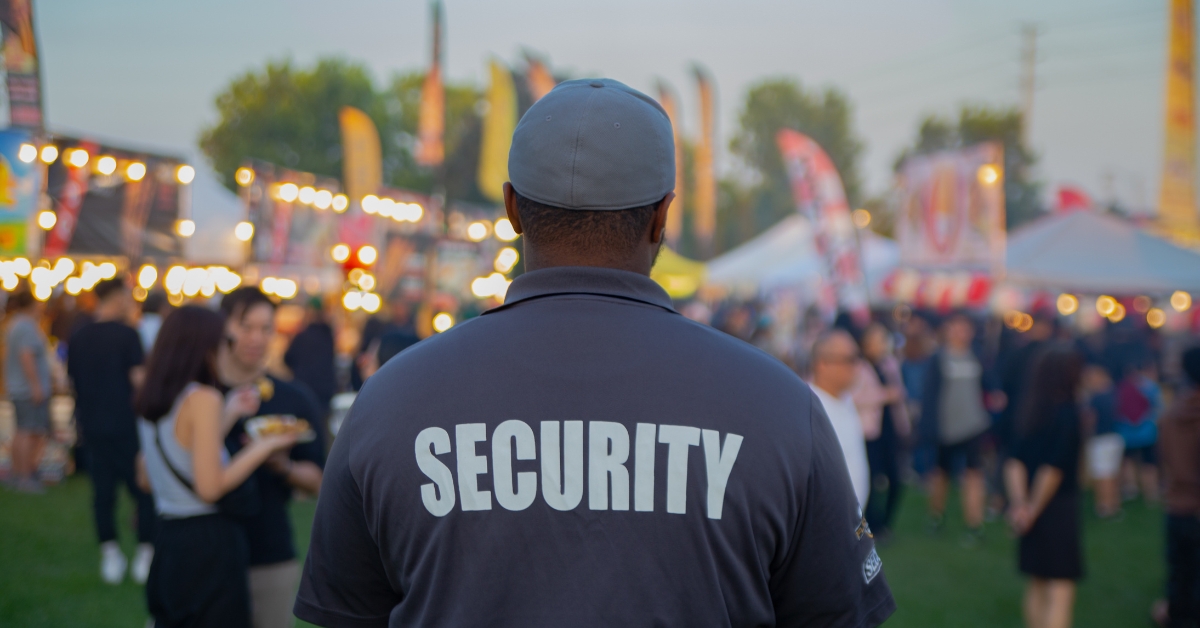
Event Security: Don’t be scared.
Event security is one of those planning topics that can feel big, intimidating, and a little “please don’t make me think about this until absolutely necessary.”
However, security planning is not about making your event feel tense, it’s about making it feel calm.
A strong event security plan protects attendees, staff, vendors, speakers, property, data, and the overall guest experience. It helps people move through the event with confidence. It gives your team a clear path when something unexpected happens. For planners managing corporate events, conferences, hotel meeting rooms, room blocks, VIPs, alcohol, transportation, and venue logistics, that clarity is everything.
The best event security plans are not dramatic. They are thoughtful, layered, and practical. They start early, involve the right people, and make sure everyone knows what to do before the doors open.
The Starting Place
One of the easiest mistakes planners can make is starting with the question, “How many security guards do we need?”
That question matters, of course. But it should not be the first question.
Start with, “What could go wrong, and how likely is it?”
A 75-person leadership dinner in a hotel conference room does not need the same plan as a 2,000-person public event with alcohol, outdoor programming, and high-profile speakers. A private training session, a business conference, a multi-day member meeting, and a large group hotel booking all carry different levels of risk.
Before you build the security plan, assess:
- Event type: Public, private, ticketed, invitation-only, corporate, association, or community-facing
- Audience profile: Known attendees, walk-ins, VIPs, executives, families, students, or high-energy crowds
- Location: Indoor, outdoor, hotel-based, convention center, campus-style, or multi-venue
- Timing: Daytime, late-night, multi-day, overnight, or connected to offsite events
- Alcohol: Open bar, cash bar, drink tickets, hosted receptions, or no alcohol
- Movement: Entrances, exits, registration, hotel lobby flow, transportation, elevators, escalators, and queues
- External factors: Weather, protests (potential or planned), nearby construction, local crime patterns, traffic, or public visibility
Risk Matrix and Decision Makers
A simple risk matrix can help. Score each concern from 1 to 5 for likelihood and 1 to 5 for impact. Multiply the two numbers. Anything that scores high should have a mitigation plan, an owner, and a clear escalation path.
This does not have to be overcomplicated. It just has to be intentional.
Security should never live in one planner’s spreadsheet and a prayer.
For small meetings, your planning team may be simple: the event lead, venue contact, registration lead, and security or operations contact. For larger programs, you may need a broader group that includes the venue, security vendor, fire/life safety contact, EMS or medical provider, transportation lead, accessibility lead, communications lead, IT contact, and executive decision-maker.
The goal is not to make meetings bigger. The goal is to make responsibility clearer.
Before the event, define who has authority to:
- Delay doors
- Pause programming
- Stop alcohol service
- Remove a guest
- Call 911
- Evacuate
- Shelter in place
- Cancel the event
- Resume programming
- Speak to media
- Notify attendees
That last part matters. In a stressful moment, the decision-maker should not be whoever happens to be closest to the radio.
Event Security Plan
A good event security plan does not need to be a 90-page document that nobody reads. It needs to be clear enough that tired humans can use it when the pressure is on.
At minimum, include:
List the event name, date, location, hours, estimated attendance, event type, alcohol status, VIP details, and any known risk factors.
Map entrances, exits, emergency exits, fire lanes, first aid, registration, bag check or screening areas, hotel meeting space, command post, ADA routes, vendor access, rideshare zones, shelter areas, and evacuation routes.
If your event includes a hotel room block, multiple conference rooms, offsite events, or shuttle service, make sure those areas are included too. Security does not stop at the ballroom doors.
Document each security post, shift times, supervisor structure, break coverage, radio channels, and escalation chain. Avoid vague instructions like “watch the door.” Define what that person is watching for and what they should do if something happens.
Clarify credential types, badge rules, vendor access, speaker access, media access, staff access, re-entry policy, and lost badge procedures.
A credential matrix can be incredibly helpful. Attendees, sponsors, speakers, vendors, staff, security, media, and VIPs should not all have the same access. And “all access” should be rare, not a personality trait.
Plan for medical emergencies, fire, severe weather, power outage, crowd surge, disorderly guests, active threats, suspicious packages, transportation issues, missing children or vulnerable adults, cyber outages, and communication failures.
For each scenario, define whether the likely response is to monitor, hold, relocate, shelter in place, evacuate, cancel, or resume.
Crowd Management vs. Crowd Control
Crowd management is one of the most important parts of event security, especially for conferences, large receptions, general sessions, expos, and hotel events with multiple meeting rooms.
Crowd management is proactive. Crowd control is reactive. Planners want the first one.
Think about where people naturally slow down or gather:
- Registration desks
- Badge pickup
- Bars
- Food stations
- Sponsor activations
- Photo opportunities
- Elevators and escalators
- Bathroom corridors
- General session doors
- Popular breakout rooms
- Transportation loading zones
These are the places where guest experience and safety overlap.
To improve crowd flow:
- Keep exits and emergency lanes clear
- Place signage before decision points
- Separate help desk issues from the main check-in line
- Avoid placing sponsor booths or decor near exits
- Watch rooms with high-demand content
- Assign staff to observe density, not just scan badges
- Plan for everyone leaving at once, not just casual movement
This is especially important when booking hotels for meetings and events. A beautiful downtown conference center or business hotel may have great space, but planners still need to understand how attendees will move between guest rooms, conference rooms, meals, receptions, and transportation.
Security Meets Accessibility
Security and accessibility should be planned together.
Every attendee needs a safe and respectful way to enter, move through, and exit the event. That includes attendees using mobility devices, attendees with service animals, attendees who need accessible seating, and attendees who may need assistance during an emergency.
Plan for:
- Accessible entry and screening lanes
- ADA-compliant routes
- Accessible seating and companion seating
- Clear signage
- Elevator or escalator contingency plans
- Accessible restrooms
- Service animal guidance
- Emergency messaging that is not audio-only
- Accessible evacuation support
Security staff should be briefed before doors open. The entry line is not the place to improvise accessibility policy.
Cybersecurity
Modern event security includes more than physical space.
Registration platforms, check-in systems, badge printers, event apps, Wi-Fi, payment systems, digital signage, lead retrieval, hotel rooming lists, and QR codes all create potential vulnerabilities.
Before the event, ask:
- Who has admin access to event systems?
- Is multi-factor authentication turned on?
- Are shared passwords being used?
- Is there an offline check-in backup?
- Is public Wi-Fi separate from production and registration systems?
- What happens if the badge printer fails?
- Who owns attendee data after the event?
- When will vendor access be revoked?
Cybersecurity may not feel like a traditional planner responsibility, but when check-in goes down or attendee data is exposed, it becomes an event problem very quickly.
Outdoor Events Considerations
For outdoor events, weather planning is not optional.
Severe weather can move crowds, damage structures, delay transportation, create medical issues, and force fast decisions. Your weather plan should name the weather monitor, identify the source being used, define shelter locations, and clarify who has authority to pause or resume programming.
Do not make the stage manager, speaker wrangler, and catering problem-solver also responsible for tracking lightning. Give weather a clear owner.
For outdoor events, include plans for:
- Lightning
- Heat
- Cold
- Wind
- Rain
- Flooding
- Tent or stage thresholds
- Transportation delays
- Post-storm site inspection
The plan should also include pre-written attendee messages. In a crisis, nobody suddenly becomes a poet. Write the words before you need them.
Documentation
No planner gets into events because they adore paperwork. But documentation matters.
If something happens, the questions become: What did you know? What did you plan? Who was responsible? What action did the team take?
Keep records of:
- Venue emergency procedures
- Permits
- Occupancy limits
- Security plans
- Medical plans
- Weather plans
- Alcohol plans
- Accessibility plans
- Site maps
- Vendor licenses
- Certificates of insurance
- Incident reports
- Command post logs
- Staff briefing notes
- After-action reports
Space Sourcing Considerations
This is also where hotel sourcing and vendor selection matter. When comparing venues through GroupSync, planners can look beyond hotel price and meeting space. They can also consider location, layout, accessibility, transportation, proximity to emergency services, and whether the property is a strong operational fit for the program.
Start the risk assessment, review venue emergency plans, confirm capacity, identify public safety contacts, hire security, review insurance, and build the first site map.
Draft the security plan, medical plan, weather plan, communications matrix, credential strategy, alcohol controls, accessibility plan, and transportation flow.
Finalize security posts, radio plans, emergency contacts, prohibited items policies, signage, staff briefings, and check-in backup procedures.
Walk the site, test communications, confirm exits, review vendor access, run a tabletop exercise, and brief department leads.
Hold a security briefing, check radios, confirm medical coverage, monitor queues, keep exits clear, track incidents, and communicate early when something changes.
Collect incident reports, revoke system access, debrief with venue and vendors, document lessons learned, and update your templates.
The goal of event security is not to make attendees feel watched. It is to make them feel cared for.
When security is planned well, attendees know where to go. Staff know who to call. Vendors understand their access. Speakers feel supported. Sponsors get a smoother experience. And planners are not trying to make emergency decisions from memory while holding a half-dead radio and a lukewarm coffee.
That is the kind of calm every event deserves.
As you source venues, hotel meeting rooms, conference rooms, and room blocks for your next program, think about security as part of the overall planning strategy. The right venue can make crowd flow, access control, transportation, accessibility, and emergency planning much easier.
Groups360 helps planners search, compare, and book hotels for groups with greater clarity from the start. Create a free GroupSync account to explore hotel options, compare group booking opportunities, and plan meetings with more confidence before doors ever open.
Ready to plan smarter events?
Start by exploring how Groups360 GroupSync can help you find and book properties that align with your event goals, from conference rooms to full-scale group hotel bookings.