
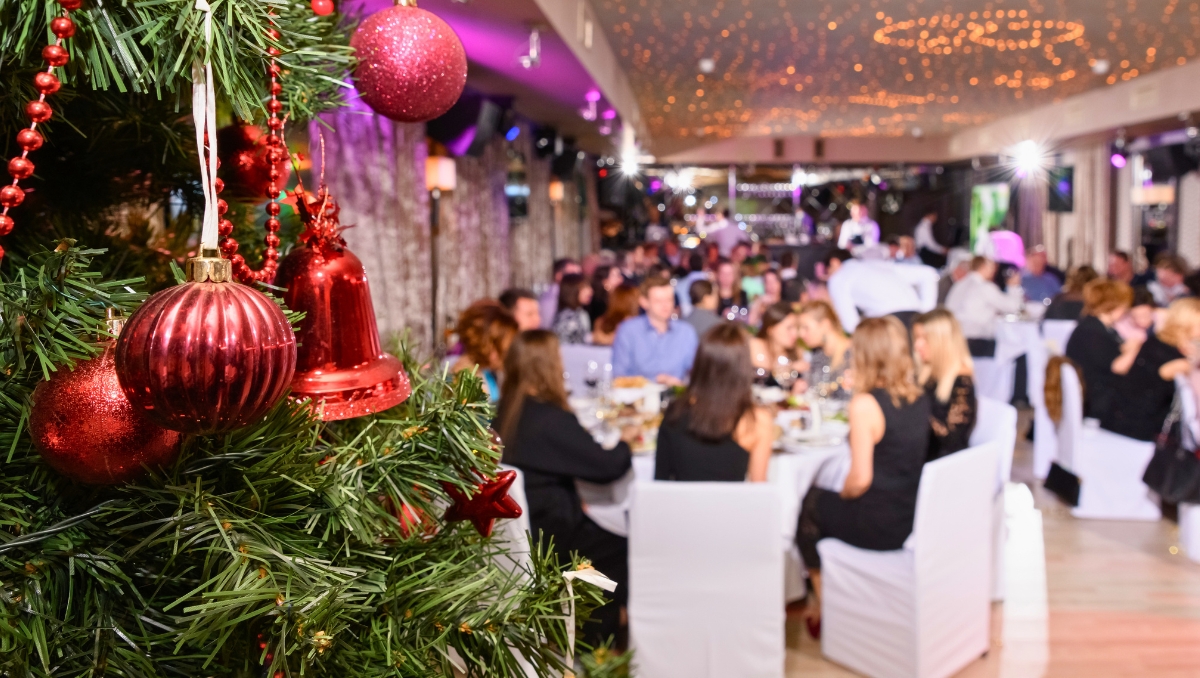
The best holiday events of 2026 will not necessarily be the biggest, loudest, or most expensive. They will be the ones that make people feel their time was well spent.
Employees, clients, and partners are looking for more than a decorated ballroom, buffet, and open bar. They want connection, recognition, memorable food, flexibility, and a reason to gather that feels genuine.
Research from Hilton, American Express Global Business Travel, and Live Nation Special Events points to a more intentional holiday event.
1. Connection Is Replacing Spectacle as the Main Event
Holiday events are increasingly being judged by how well they help people connect and feel appreciated. Décor works best when it supports a clear emotional purpose.
Hilton’s 2026 meetings and events research found that meeting new people and bonding with colleagues are primary reasons people attend work events. Local culture and the ability to show up authentically also matter.
Start by defining what guests should feel when they leave:
- “The work we did together mattered.”
- “Our company sees and values its people.”
- “This was worth making time for.”
- “This was worth stepping away from work and home for.”
That promise should show up in the invitation, arrival experience, recognition moment, menu, entertainment, and final send-off.
2. Value Engineering Is Becoming Experience Editing
Rising costs and cautious spending are pushing planners to ask harder questions about every line item. That does not mean the answer is to make the event feel cheap. It means choosing fewer, stronger elements.
Consider spending on one hero experience, such as:
- A transformed entrance
- Exceptional live entertainment
- A chef-led food experience
- A distinctive venue or meaningful recognition moment
Then reduce low-impact décor, redundant signage, oversized floral coverage, and production elements that guests will barely notice. Restaurants, museums, galleries, historic properties, music venues, and other naturally distinctive spaces can create atmosphere without requiring a generic ballroom to be completely rebuilt.
3. Earlier Dates and Daytime Formats Are Gaining Ground
The traditional December Friday-night party is no longer the only option. According to Dexter’s holiday booking data, holiday inquiries begin arriving in late August, with the busiest booking period typically running through September and October. Prime December Thursdays and Fridays are often gone by the end of October.
For planners, that means flexibility is an advantage. Consider:
- A November gratitude celebration
- A Tuesday or Wednesday evening event
- A holiday lunch, brunch, or afternoon reception
- A regional dinner series instead of one national gathering
- A smaller in-person event paired with a gift, meal credit, or community-impact option for remote employees
Earlier and daytime formats may also work better for caregivers, long commuters, religious observances, and end-of-year workloads.
4. Immersive Environments Are Replacing Generic Holiday Décor
The strongest visual direction for 2026 is theatrical, layered, and transportive. Pinterest Predicts 2026 identifies signals such as opera theatre, midnight masquerade, ceiling draping, and masquerade décor. Live Nation Special Events also points to full-sensory design, layered lighting, bold scenic touches, and branded moments that pull guests into a story.
Popular directions include midnight theatre with burgundy, brass, velvet, and candlelight; refined classic with evergreen and warm gold; an enchanted forest with branches, pine, and amber light; or a nostalgic holiday house with vintage ornaments, sweets, and live jazz.
Choose one coherent world that influences the room, menu, entertainment, dress guidance, and guest journey.
5. Food and Beverage Are Becoming Part of the Entertainment
Holiday dining is moving away from one static buffet or a long formal meal and toward discovery. Interactive stations, themed kiosks, passed bites, global flavors, premium coffee and tea, and late-night snacks give guests reasons to move through the space and keep conversations going.
Three or four excellent stations may be more effective than a sprawling buffet. A chef, baker, pitmaster, bartender, or mixologist can give the menu a sense of theater, while regional dishes, elevated comfort food, tasting trails, and take-home treats create stronger memories than a standard banquet.
Menus should clearly identify vegetarian, vegan, gluten-free, allergen-aware, halal, kosher, and other relevant options. Personalization is not a bonus when it determines whether someone can participate comfortably.
6. Zero-Proof Drinks Are Now a Baseline Expectation
Nonalcoholic beverages are no longer an afterthought. NIQ’s beverage research reports that U.S. sales of nonalcoholic beer, wine, and spirits surpassed $1 billion, signaling that moderation is becoming a lasting consumer behavior rather than a temporary trend.
For holiday events, do not hide one sad mocktail behind the bar. Give zero-proof drinks equal visual and creative status:
- A signature zero-proof cocktail with a proper name and garnish
- Seasonal tea, coffee, cider, or hot chocolate
- A sophisticated sparkling option for toasts
- Clear menus that make alcohol optional rather than socially required
- Safe transportation information and service that does not reward overconsumption
7. Recognition Is Becoming More Personal and More Flexible
The identical logo gift for every employee is losing energy. Recognition works better when it shows someone thought about the recipient.
Offer a curated choice of gifts at a similar value, or let employees choose between a gift, experience, or donation. Pair it with a specific message about the year being recognized. A short story can land more powerfully than a long list of awards.
Community impact is also moving into the celebration itself. Hilton’s 2026 research found that many attendees would rather participate in a local give-back activity than receive a physical gift. Consider a local nonprofit for a hands-on activity or employee-directed donation.
8. Wellness and Inclusion Mean Giving Guests More Ways to Participate
Wellness at a holiday event does not have to mean a forced yoga class. It can mean comfortable seating, a clear end time, accessible transportation information, a calm lounge, good food labeling, and optional activities.
Hilton found that many attendees value wellness programming, while others prefer free time to recharge alone. Give guests energy choice.
Accessibility should be visible in the venue search and event design. The American Express Global Business Travel 2026 forecast identifies accessible transportation, venues, captioning, sign language, diverse dietary options, and other inclusive planning practices as increasingly important.
When sourcing a hotel meeting room or event venue, ask:
- Is there a quiet or lower-sensory area?
- Are entrances, restrooms, seating, and transportation accessible?
- Can lighting and sound levels be controlled?
- Are dietary options clearly labeled?
- Can guests participate without dancing, drinking, public speaking, or forced games?
- Does the date account for religious observances and family schedules?
9. AI and Sustainability Are Moving Backstage
AI is becoming useful for invitations, dietary summaries, gift recommendations, routine questions, and feedback analysis. Use it to reduce friction while keeping the experience human.
Sustainability is becoming more practical too. Right-size food quantities, ask about donation and composting, use reusable décor, choose local ingredients, and avoid disposable gifts.
The Events Industry Council’s Sustainable Event Goals offer a useful framework for turning broad sustainability goals into practical event decisions.
A Practical 2026 Planning Filter
Before you book a hotel, event venue, or meeting space, ask:
- What should guests feel when they leave?
- What can guests personalize, opt into, or skip?
- Where will people actually talk and connect?
- Is the food and beverage experience distinctive and inclusive?
- How will the event recognize people specifically?
- What can be reused, donated, reduced, or measured?
Once the experience is defined, GroupSync can help planners search, compare, and book group hotel rooms and meeting space. See also The Truth About Instant Hotel Booking for Groups and Groups360’s organizer solutions.
The Takeaway
The 2026 holiday event is less about throwing the biggest party and more about proving that the gathering was worth the time, money, travel, and emotional effort required to attend.
The strongest formula is simple: one memorable atmosphere, excellent food and drinks, optional participation, specific recognition, room to breathe, and a meaningful reason to gather.
Ready to plan a holiday event that feels personal from the first invitation to the final goodbye? Create a free GroupSync account to search, compare, and book the hotel rooms, room blocks, and meeting space your group needs.
Ready to Plan Smarter Events?
Create a free GroupSync account to search hotels, compare meeting space, manage group booking needs, and simplify the hotel search process so you can focus on designing a better attendee experience.
