Where Work Trips Turn Into Vacation: 10 Group-Friendly Event Destinations Attendees Will Want to Extend

Where Work Trips Turn Into Vacation: 10 Group-Friendly Event Destinations Attendees Will Want to Extend

Bleisure travel may sound like a buzzword somebody invented in a hotel lobby between sessions, but the behavior behind it is very real. Bleisure is the blending of business and leisure travel. More attendees are looking at work trips as a chance to make the most of their time, their airfare, and their very precious PTO.

For event planners, this creates an interesting opportunity. The destination itself becomes part of the value proposition.

Yes, the meeting still needs to work. You still need the right conference room, hotels with meeting space, room block strategy, airport access, walkability, budget alignment, and all the usual planning gymnastics. But when attendees can picture themselves staying an extra day or two, bringing a partner, exploring a new neighborhood, or finally checking a city off their personal list, the event starts to feel less like an obligation and more like an opportunity.

So, where should planners look? Not just beaches. Bless them, we love them, but bleisure-friendly destinations can also mean mountain towns, music cities, historic districts, food-focused cities, desert resorts, museum-rich capitals, and walkable urban convention districts.

Here are 10 group-friendly destinations that make it easier to move from business meetings to vacation mode.

san diego ca

1. San Diego, California

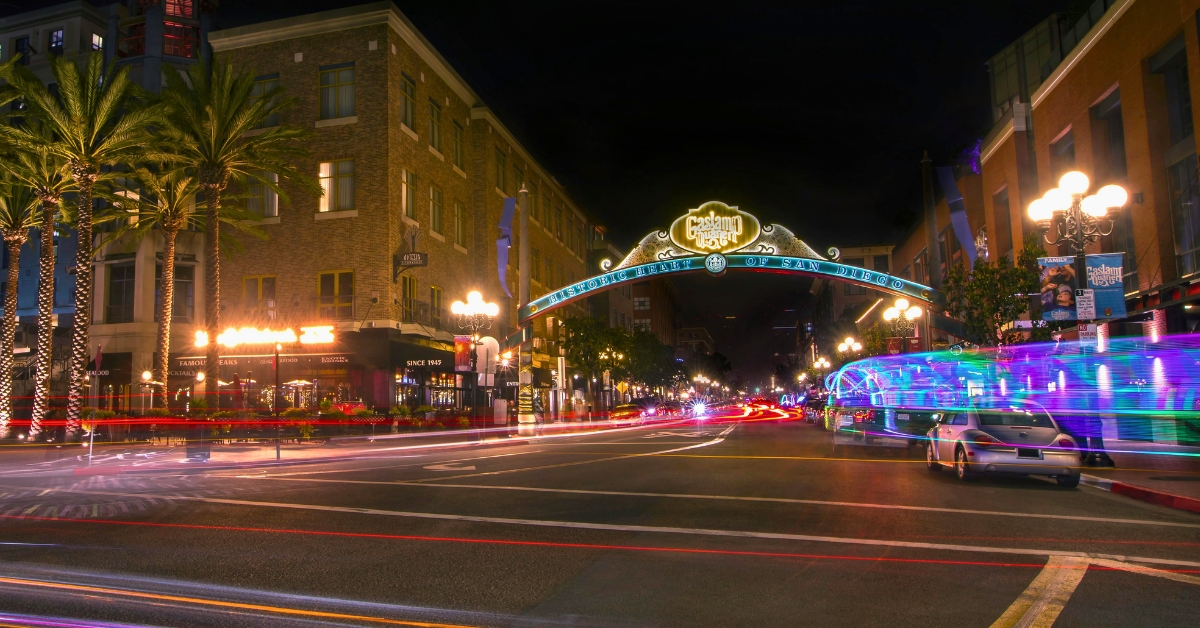
San Diego is one of the more obvious bleisure choices, but it earns the spot. The destination has sunshine, waterfront venues, outdoor receptions, cultural neighborhoods, and a convention center located near the Gaslamp Quarter, marina, restaurants, and attractions. For planners, that means fewer transportation headaches and more natural attendee appeal.

From the planner perspective, San Diego works well for incentive trips, corporate events, association meetings, and programs that benefit from outdoor networking. The San Diego Tourism Authority highlights the city’s airport, convention center, hotels, warm weather, attractions, and outdoor meeting and reception options as key assets for meeting planners.

From the attendee perspective, San Diego makes the “should I stay the weekend?” question dangerously easy. Attendees can add time for beaches, Balboa Park, the San Diego Zoo, waterfront dining, or nearby cultural experiences. San Diego’s regional tourism profile also points to more than 70 miles of coastline and a culinary scene influenced by its binational identity with Mexico.

Best fit for: Wellness-forward meetings, incentive programs, outdoor receptions, medical or tech conferences, and groups that want built-in leisure appeal.

denver co

2. Denver, Colorado

Denver is a strong choice when you want attendees to feel like they are going somewhere with both city energy and outdoor access. It has a major airport, a walkable downtown, a convention center district, cultural attractions, and easy extensions into the Rockies.

Visit Denver describes the city as having a central location, an international airport, a walkable downtown, shopping, dining, nightlife, cultural attractions, hotel inventory, and a convention bureau built to support meetings.

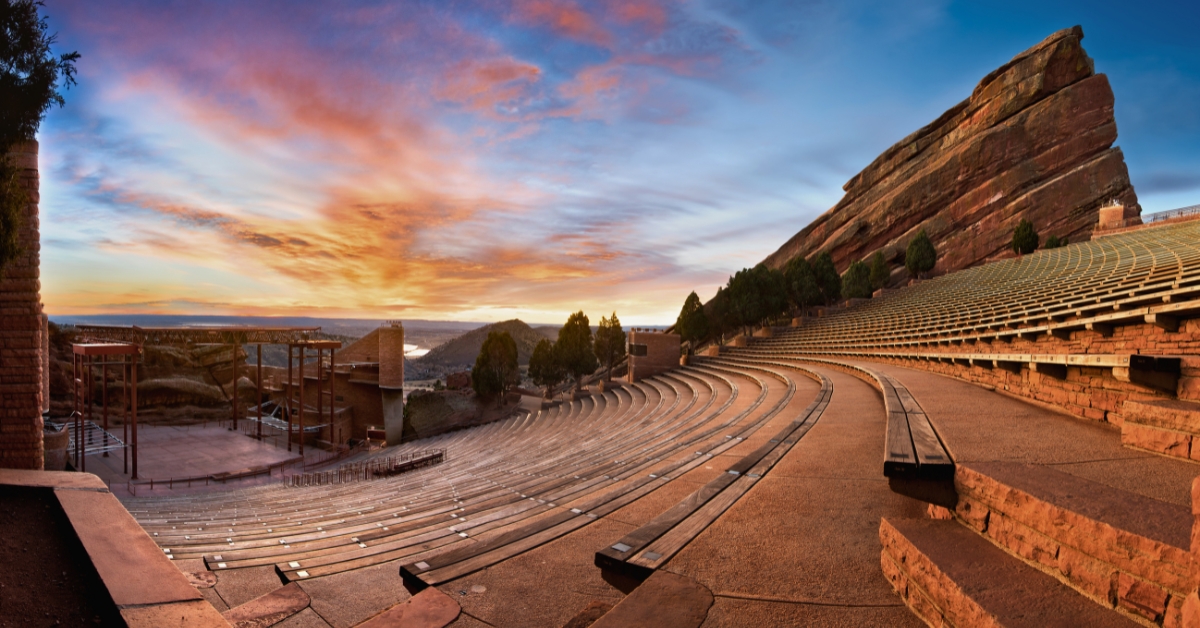
For planners, Denver is especially useful when you need a practical, accessible destination but still want the event to feel fresh. The Colorado Convention Center and hotel options give planners a solid base, while off-site experiences like Red Rocks, art districts, food halls, breweries, and mountain-adjacent activities give the program personality. Groups360’s own Denver guide highlights group-friendly experiences such as Red Rocks, the Denver Museum of Nature & Science, the Denver Art Museum, and downtown hotel options with substantial meeting space.

For attendees, Denver offers a very clean transition from name badge to hiking shoes.

Best fit for: Leadership meetings, sales kickoffs, association meetings, outdoor-minded groups, and programs with optional pre- or post-event adventure.

Nashville Tennessee

3. Nashville, Tennessee

Nashville is a planner favorite for a reason. It is accessible, lively, and full of built-in entertainment that does not require attendees to work too hard to find something fun after the closing session.

Visit Music City positions Nashville’s meetings team as a one-stop planning resource, helping with site inspections, local suppliers, off-site events, convention services, and marketing materials.

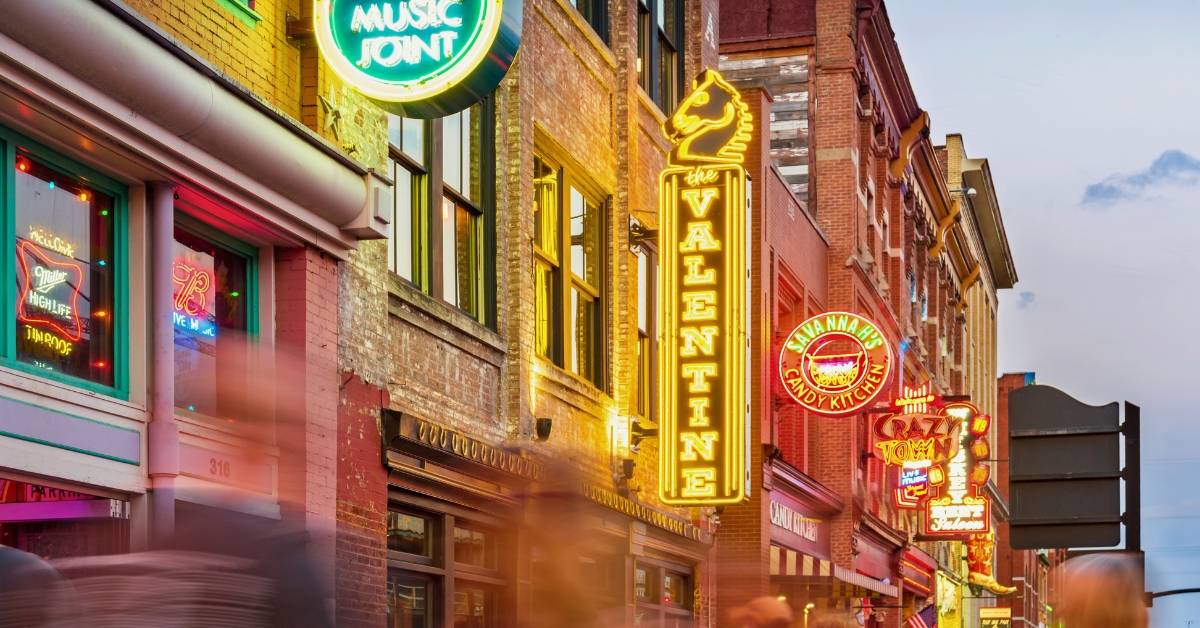
From the event planner perspective, Nashville gives you strong hotel inventory, a recognizable destination brand, and a walkable downtown convention district. Music City Center sits in the middle of a destination where restaurants, live music, private venues, and brandable off-site options are easy to fold into the attendee experience.

From the attendee perspective, Nashville is a “just one more night” city. Live music, food, sports, neighborhoods, rooftop bars, and cultural attractions make it easy for attendees to justify staying through the weekend, especially if the event ends on a Thursday or starts on a Monday.

Best fit for: Corporate events, sales meetings, association programs, music-forward networking events, and groups that want high-energy evenings without complicated logistics.

Savannah Georgia

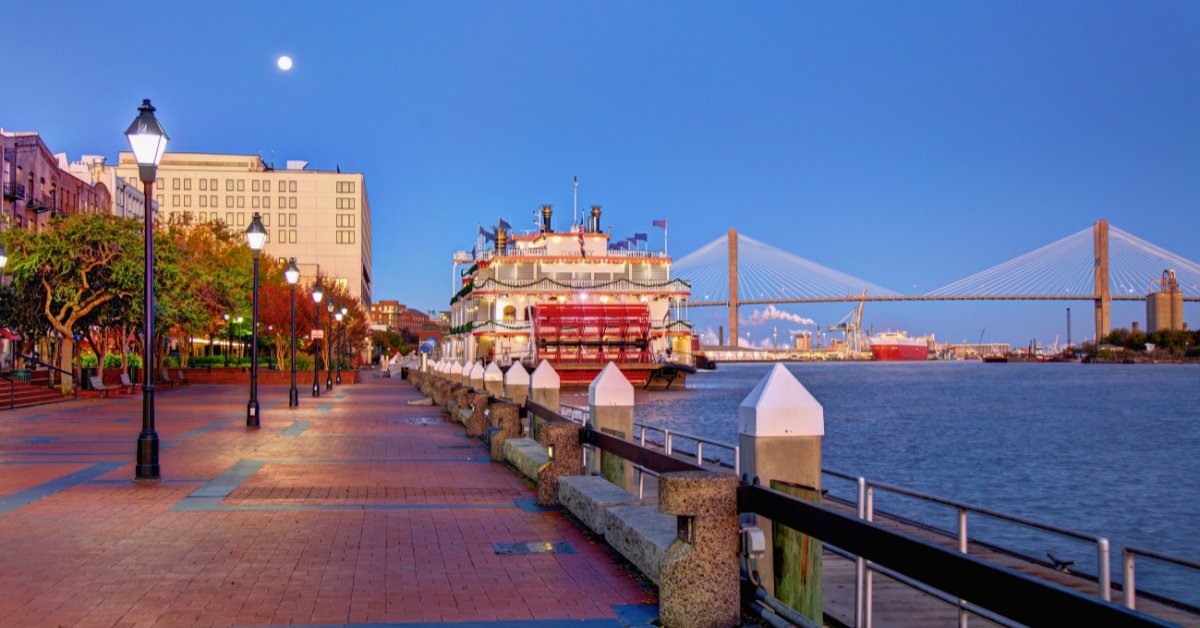
4. Savannah, Georgia

Savannah is ideal for planners who want the destination to feel special without overwhelming attendees. It offers history, walkability, architecture, food, riverfront views, and a slower pace that can make even a packed meeting agenda feel more human.

Visit Savannah promotes the city as a meetings destination with an “unparalleled experience” for attendees. The Savannah Convention Center also offers waterfront meeting space with complimentary ferry access to the historic district, which gives planners a useful blend of convention infrastructure and leisure-friendly charm.

For attendees, Savannah is easy to love. The historic squares, restaurants, ghost tours, riverfront, boutique hotels, and nearby coastal excursions make it a natural extension destination. It is especially strong for groups that want atmosphere and intimacy rather than a massive-city feel.

Best fit for: Executive retreats, association meetings, board meetings, incentive-style programs, and groups that value history, food, and walkability.

Chicago Illinois

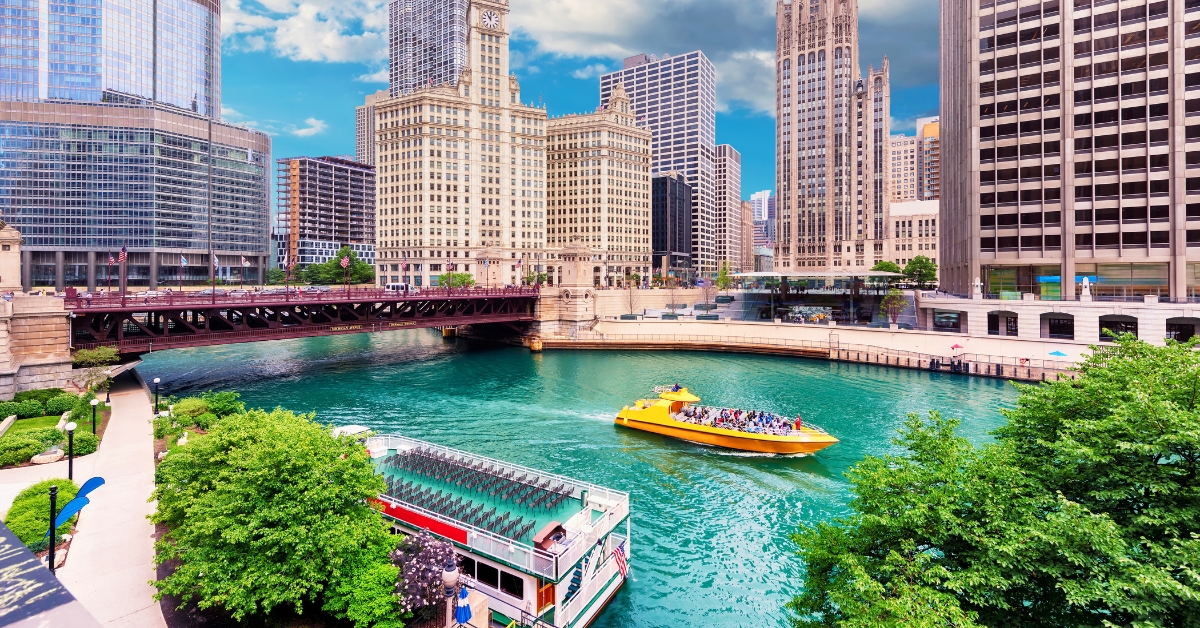
5. Chicago, Illinois

Chicago gives planners scale, sophistication, and serious infrastructure. It is also a destination attendees can easily turn into a personal getaway, especially if they love museums, architecture, restaurants, sports, theater, lakefront walks, or shopping.

McCormick Place is described by Choose Chicago as the largest convention center in the Western Hemisphere, with more than 2.6 million square feet of exhibition space and about 3 million visitors annually.

For planners, Chicago is a powerhouse for large conventions, trade shows, and corporate events that need extensive meeting space, hotel inventory, and air access. But the attendee experience does not have to feel like a giant convention machine. Choose Chicago highlights the McCormick Place campus as being minutes from downtown with access to attractions, restaurants, museums, neighborhoods, and cultural corridors.

For attendees, Chicago is an easy vacation add-on because there is no shortage of ways to spend one or two extra days. Architecture boat tour? Yes. Art Institute? Obviously. Deep dish? If the group chat demands it.

Best fit for: Large conferences, trade shows, citywide conventions, corporate business travel, and groups that need scale plus big-city leisure options.

New Orleans Louisiana

6. New Orleans, Louisiana

New Orleans is not just a destination. It is a whole mood, and that can be a gift when you are trying to make a meeting memorable.

New Orleans & Company supports meeting planners with complimentary services related to planning, organization, promotion, and destination support. The organization also emphasizes the city’s unique culture as part of the meeting experience.

For planners, New Orleans offers convention infrastructure, hotels, restaurants, music venues, historic spaces, and a destination identity that already knows how to host. The Ernest N. Morial Convention Center is consistently positioned as a major meetings venue, and the city has deep experience with large conventions and complex group programs.

For attendees, New Orleans is one of those places where the after-hours experience matters. Food, music, history, neighborhoods, riverfront experiences, and cultural tours can turn a business trip into something that feels personal and memorable.

Best fit for: Association meetings, culinary programs, networking-heavy events, incentive groups, and conferences where culture is part of the draw.

Orlando Florida

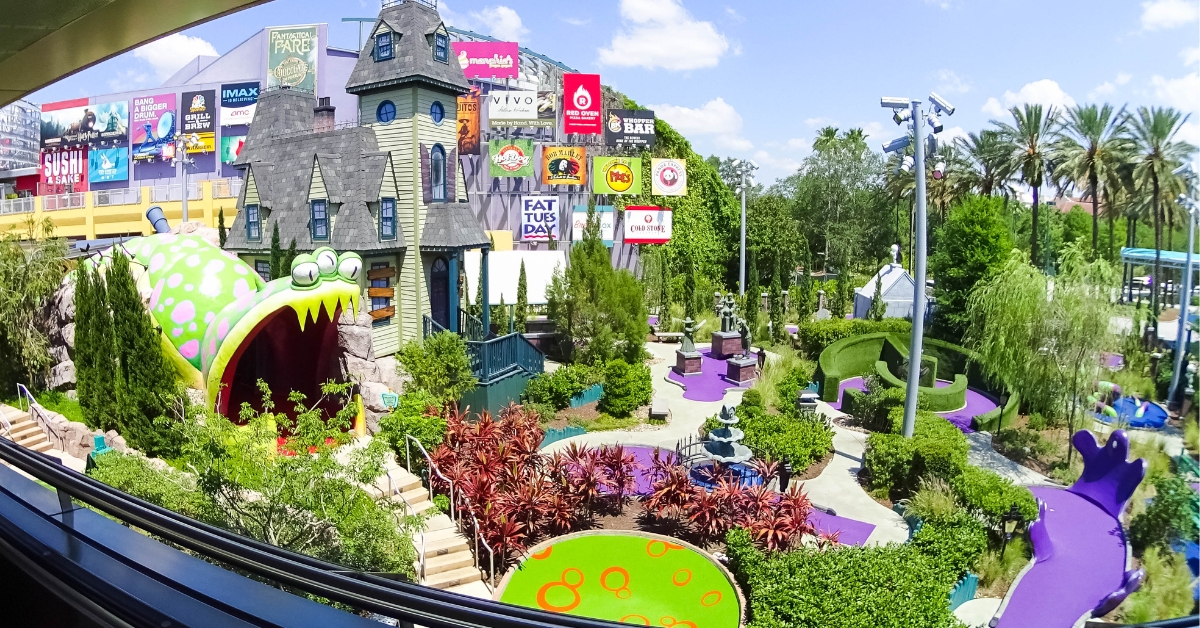
7. Orlando, Florida

Orlando is often treated like the obvious family-extension destination, and honestly, fair. But for planners, its strength is bigger than theme parks.

Visit Orlando positions the destination as a leading meetings city with hotels, venues, services, attractions, dining, nightlife, arts and culture, sports and outdoors, spas, and shopping for convention attendees.

For planners, Orlando offers substantial meeting infrastructure, resort options, convention hotels, and entertainment ecosystems that are built for groups. It can work beautifully for large corporate events, association meetings, training programs, and gatherings where attendees may want to bring family before or after the official schedule.

For attendees, Orlando makes vacation extension simple because the leisure infrastructure is already there. Theme parks are the headline, but golf, spas, dining, shopping, arts, and outdoor activities give attendees options beyond the most obvious mouse-shaped itinerary.

Best fit for: Large meetings, training events, family-friendly conferences, association gatherings, and groups looking for high-capacity hotel booking and entertainment options.

Austin Texas

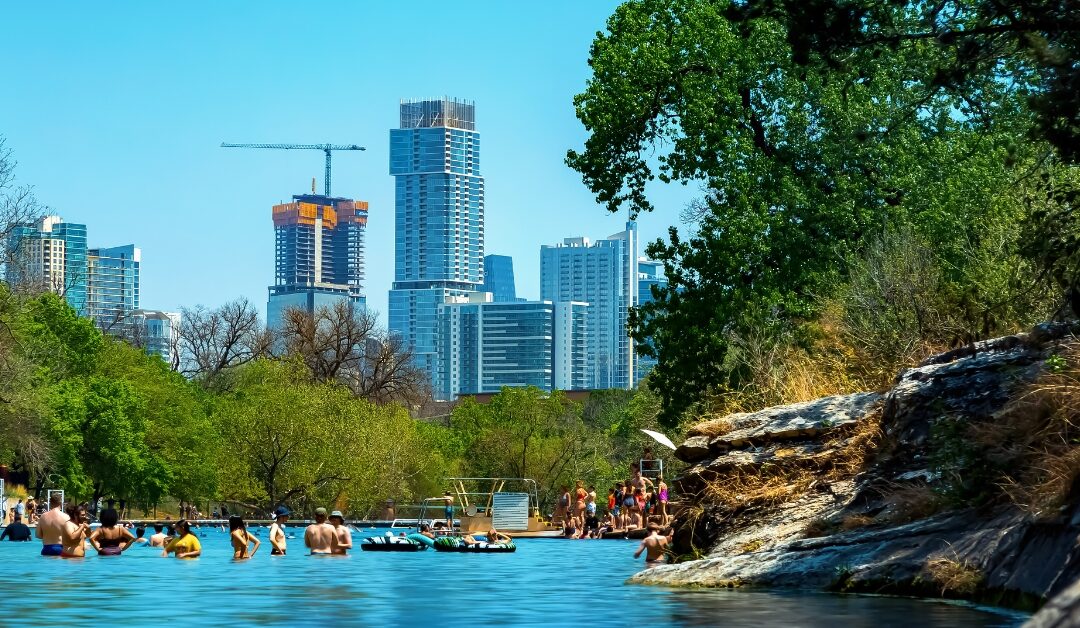
8. Austin, Texas

Austin works well when planners want the event to feel current, creative, and a little less buttoned-up. The city brings together live music, food, tech, outdoor spaces, and a strong sense of place.

Visit Austin says the city offers personalized meeting experiences, award-winning food, live music, unique venues, and a culture of innovation.

For planners, Austin is useful for tech companies, creative industries, startups, leadership retreats, and events where networking needs to feel more organic. You can build a program around live music, food trucks, outdoor patios, local makers, wellness breaks, or neighborhood-based experiences.

For attendees, Austin is highly extendable because the city feels easy to explore without a rigid itinerary. Attendees can stay for live music, barbecue, Barton Springs, shopping, comedy, art, or just a very good patio situation.

Best fit for: Tech meetings, creative industry events, leadership retreats, networking programs, and groups that want casual energy with strong destination personality.

Asheville North Carolina

9. Asheville, North Carolina

Asheville is a fantastic choice when the goal is to create an event that feels restorative, creative, and close to nature. It is not the right fit for every group size, but for the right program, it can be magic.

Explore Asheville notes revitalized venues, expanded service at Asheville Regional Airport, and local planning support for meetings and events. The CVB also offers complimentary services to help planners find the right fit, secure accommodations, and manage planning details.

For planners, Asheville works well for retreats, incentive programs, wellness events, leadership gatherings, nonprofit meetings, and creative teams. The Blue Ridge Mountain setting gives you a built-in narrative around reflection, connection, sustainability, and fresh thinking.

For attendees, Asheville offers mountain views, hiking, craft beverages, food culture, art studios, live music, wellness experiences, and nearby scenic drives. It gives people permission to slow down, which is sometimes exactly what makes them want to stay longer.

Best fit for: Retreats, wellness-focused programs, smaller conferences, leadership offsites, and groups that want mountain energy without losing strong food and culture.

Scottsdale Arizona

10. Phoenix and Scottsdale, Arizona

Phoenix and Scottsdale give planners that desert-meets-resort combination that can work beautifully for corporate events, incentive trips, executive meetings, and wellness-forward programs.

The Phoenix Convention Center highlights sustainability practices, recycling efforts, biodegradable materials, and access to METRO Light Rail, including connections to convention hotels and Phoenix Sky Harbor Airport.

For planners, the destination offers downtown convention infrastructure, resort properties, golf, spas, desert venues, and strong winter and shoulder-season appeal. For groups that want outdoor receptions or wellness programming, the Sonoran Desert creates a powerful sense of place.

For attendees, Phoenix and Scottsdale are especially compelling when the rest of the country is cold, gray, and questioning its life choices. Attendees can add golf, spa time, hiking, desert tours, dining, shopping, art experiences, or resort downtime.

Best fit for: Incentive travel, executive meetings, wellness programs, luxury corporate events, and groups that want warm-weather leisure options without defaulting to the beach.

How planners can make bleisure easier without creating chaos

Choosing the right destination is only half the strategy. The planner still has to make the extension feel easy, ethical, and operationally clean.

A few practical ways to support bleisure travel:

  • Select hotels near both meeting space and leisure districts. This helps attendees explore without expensive transportation.
  • Negotiate shoulder-night rates when possible. Ask hotels about pre- and post-event availability for attendees who want to extend.
  • Clarify what is business-paid versus personal-paid. Keep policies clean, especially for corporate travel management teams.
  • Build optional experiences, not mandatory field trips. Not everyone wants a packed agenda after a packed agenda.
  • Offer attendee-friendly destination content. Share simple ideas for one extra morning, one extra evening, or one extra weekend.
  • Consider family or partner extensions carefully. This can be a benefit, but planners need clear boundaries around access, registration, insurance, and event-only programming.

This is also where hotel sourcing matters. A bleisure-friendly destination can still become a logistical mess if the hotel block is too far from the real attendee experience. Planners need to think beyond “Does this hotel have the meeting space?” and ask, “Does this location support the way attendees will actually use the trip?”

Use GroupSync to source hotels that support the whole trip

Once you choose a destination, GroupSync can help you search, compare, and book hotels with the right mix of guestrooms, meeting space, location, rates, and amenities. Instead of bouncing between hotel booking sites, hotel reservation sites, and separate RFP threads, planners can use GroupSync to simplify group hotel booking and find properties that fit both the business purpose and the attendee experience.

Whether you are booking hotel rooms for a corporate event, sourcing hotels with conference rooms, managing a room block, or looking for group rates for hotels near a convention district, GroupSync helps reduce the friction of hotel search and group reservations.

Because the best bleisure events do not happen by accident. They happen when planners choose destinations with purpose, source hotels strategically, and build enough breathing room for attendees to actually enjoy where they are.

Ready to plan a smarter group trip?

Sign up for a free GroupSync account and start sourcing hotels for your next meeting, conference, or corporate event.

5 U.S. Airport Hotels That Make Fast Meetings Feel Easy

5 U.S. Airport Hotels That Make Fast Meetings Feel Easy

Some meetings do not need a grand destination strategy.

They do not need three receptions, a themed activation, a custom stage build, or a full attendee journey with twelve emotional touchpoints and a branded mocktail named after the CEO’s favorite hiking trail.

Sometimes, the win is much simpler.

You need the right people in the same room. You need them to arrive without losing half a day to ground transportation. You need a meeting space that works, hotel rooms that are easy to book, and a location that does not require attendees to decode a shuttle schedule like it is an ancient prophecy.

That is where the right airport hotel becomes incredibly valuable.

For medium-sized meetings, especially groups of about 6 to 30 people, in-terminal and airport-connected hotels can solve a very real planner problem: how do you gather people quickly without making the travel experience feel harder than the meeting itself?

A good airport hotel does not just save time. It reduces friction, protects the agenda, and gives attendees a smoother experience from the moment they land. For summer meetings, executive sessions, sales trainings, board meetings, and regional team gatherings, that kind of efficiency can be the difference between “that was productive” and “why did we all fly here for this?”

Below are five U.S. airport hotels that stand out for fast, medium-sized meetings, based on terminal access, meeting-space fit, airlift, room inventory, and overall planning practicality.

What Makes an Airport Hotel Good for Meetings?

Before we get into the list, it is worth separating a true airport meeting hotel from a hotel that simply happens to live somewhere near an airport.

There is a difference.

For quick meetings, planners should look for:

  • Direct terminal access or very low transfer friction
  • Right-sized rooms for 6 to 30 attendees
  • Strong AV and catering support
  • Enough guestrooms to support short booking windows
  • Reliable airlift from multiple markets
  • Easy wayfinding for attendees who are tired, busy, or mildly feral after a travel day

Airport hotels are not always the emotional centerpiece of a program. But for the right meeting type, they are strategic little workhorses. And honestly, we love a workhorse with Wi-Fi and decent coffee.

1. Grand Hyatt DFW

grand hyatt dfw

If the assignment is “make this meeting as easy as humanly possible,” Grand Hyatt DFW is one of the strongest U.S. options.

Located inside Terminal D at Dallas Fort Worth International Airport, the hotel gives planners one of the cleanest airport-meeting setups available. Attendees can land, walk to the hotel, attend the meeting, and return to their terminal with very little wasted motion. For busy executives or teams flying in from multiple cities, that ease matters.

The meeting-space inventory is also unusually helpful for medium-sized groups. The hotel lists rooms like the Atlantic Boardroom for 12, the Executive Boardroom for 16, and several flexible meeting rooms that can support groups in the 20 to 50 range. That means planners are not forced to choose between a too-small boardroom and a ballroom that makes 18 people look like they accidentally wandered into a shareholder meeting.

The property also offers full AV support, catering, and event planning services, which gives it enough infrastructure for polished meetings without overcomplicating the production. For a one-day leadership retreat, client presentation, or regional strategy meeting, this is the kind of venue that lets the logistics disappear into the background.

That is the real value here. Grand Hyatt DFW allows the meeting to be the point, not the journey to the meeting.

Best for:

  • Executive meetings
  • Board meetings
  • Domestic fly-in gatherings
  • One-day strategy sessions
  • Short-notice meetings where access matters

2. Grand Hyatt at SFO

grand hyatt sfo

The Grand Hyatt at SFO is what happens when an airport hotel remembers that people still enjoy nice things.

Connected to San Francisco International Airport by AirTrain, the property offers strong terminal access without sacrificing the feel of a more elevated meeting environment. That makes it a smart option for West Coast-based meetings where the attendee experience still needs to feel polished, modern, and intentional.

The hotel offers more than 14,000 square feet of meeting space across 11 rooms. For medium-sized groups, rooms like Starliner, Stratocruiser, and Whisperjet provide options that feel more appropriately scaled than a generic ballroom setup. That is especially important for meetings where conversation, trust, or decision-making are central to the agenda.

For planners, the appeal is in the balance. This hotel works for quick airport access, but it does not feel like a purely transactional airport stop. It can support executive conversations, high-value client meetings, and internal team sessions where the environment needs to communicate focus and professionalism.

The SFO location also works well for groups with attendees coming from West Coast markets, Asia-Pacific connections, or Bay Area-based offices. Add in direct access to airport transit and the ability to connect to regional transportation, and the hotel becomes a useful bridge between airport convenience and city-level meeting polish.

Best for:

  • West Coast executive meetings
  • Client-facing sessions
  • Leadership offsites
  • Teams with Bay Area or Asia-Pacific travel patterns
  • Meetings that need airport convenience without feeling bare-bones

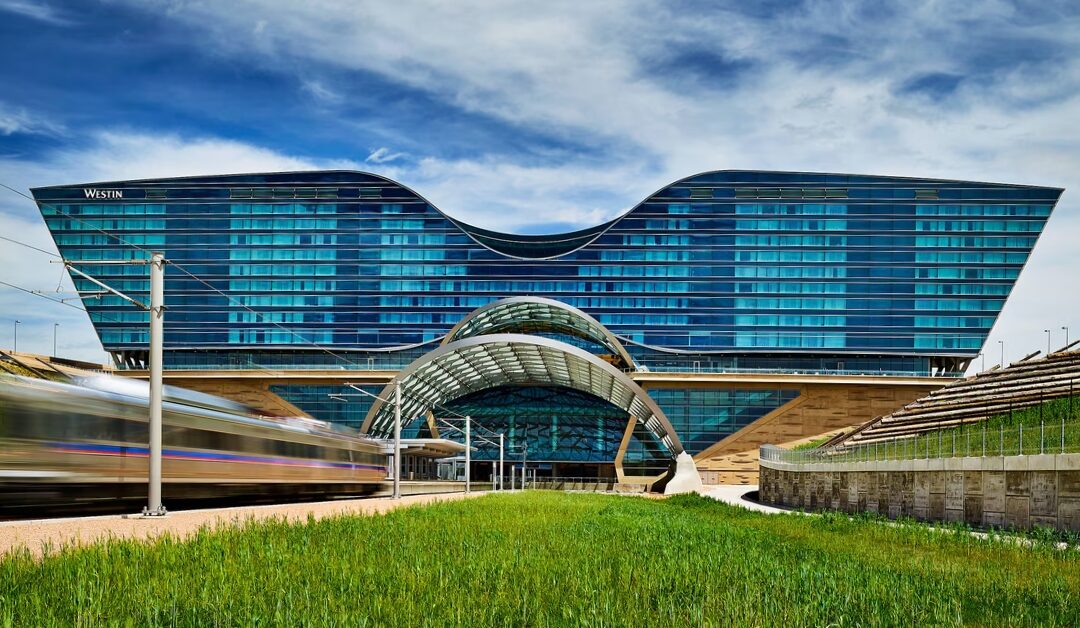
3. The Westin Denver International Airport

Westin Denver International Airport

For domestic meetings, The Westin Denver International Airport has a lot going for it.

Denver is already a practical midpoint for many U.S.-based teams, and this hotel sits directly at Denver International Airport. That makes it especially useful for groups flying in from multiple regions who do not need a full destination program, but do need everyone gathered in one place without forcing a downtown transfer.

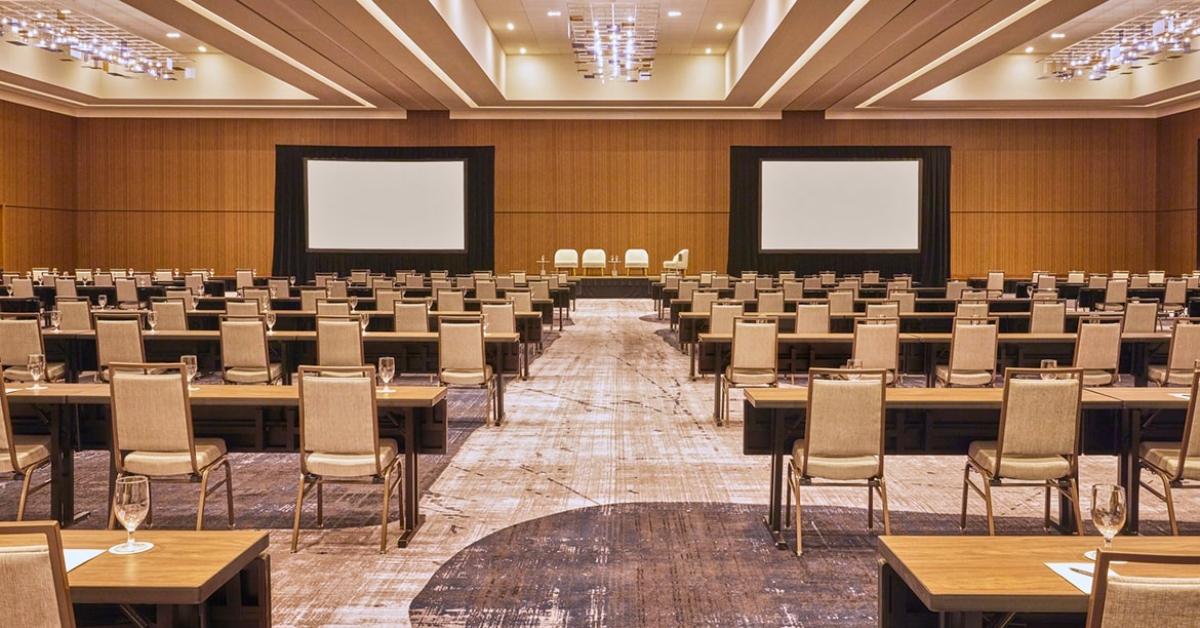
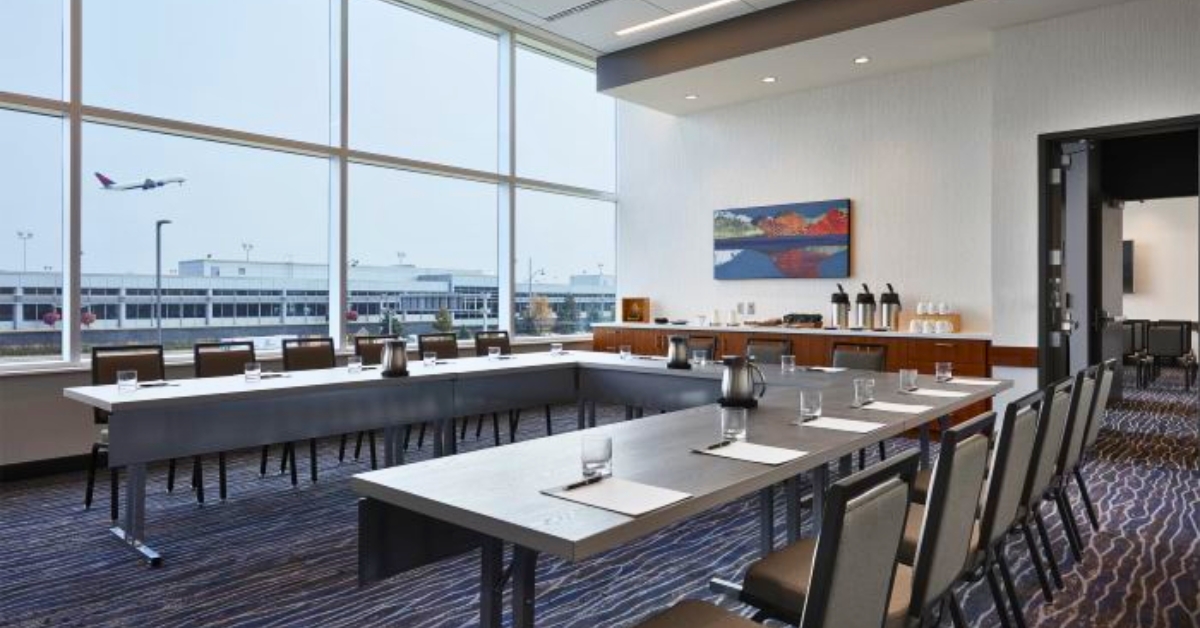
The hotel offers 24 event rooms, more than 36,000 square feet of total event space, and 15 breakout rooms. For a medium-sized meeting, that gives planners room to shape the experience thoughtfully. You can host a focused boardroom-style session, a training, or a small internal summit without feeling boxed into one format.

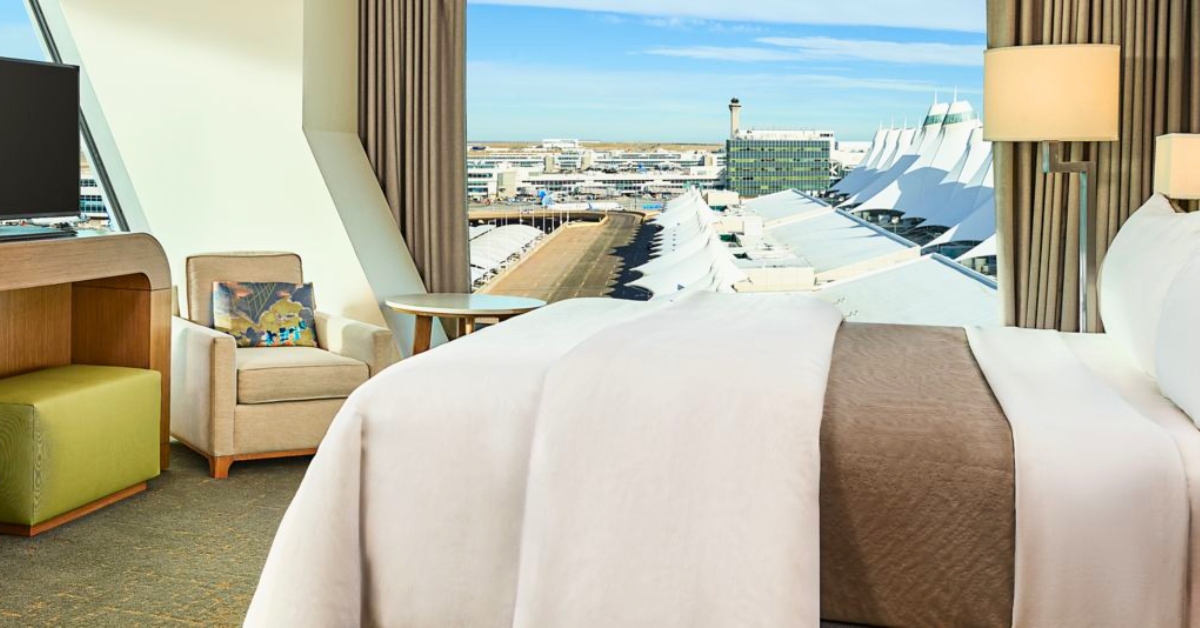
The Westin also has a more elevated feel than many traditional airport hotels. That matters when attendees are giving up part of a busy week to travel. A better arrival experience, stronger guestroom quality, natural light, and good food can change how people walk into the room. And when the goal is productivity, mood is not fluff. Mood is infrastructure.

Another planning advantage is Denver’s transit connectivity. The hotel sits near the airport transit center, which gives groups the option to connect into the city if they want to add a dinner, optional activity, or longer stay component without making downtown access mandatory.

Best for:

  • National team meetings
  • Training sessions
  • Small internal conferences
  • Groups flying from both coasts
  • Meetings that may want optional city access

4. Hilton Chicago O’Hare Airport

Hilton Chicago O'Hare

The Hilton Chicago O’Hare Airport is not necessarily the most glamorous hotel on this list, but it may be one of the most practical.

And sometimes practical is the assignment.

Located on airport grounds and connected to Terminals 1, 2, and 3 by indoor walkways, this hotel is built for efficiency. Chicago O’Hare is also one of the strongest domestic connectivity airports in the country, which makes it a smart choice when attendees are coming from multiple U.S. markets.

The meeting-space inventory is particularly useful for smaller and medium-sized groups. Hilton’s event materials include online bookable meeting space for groups up to 35 people, plus instant reservations for 10 to 25 guestrooms. That kind of functionality matters when the meeting is too important to be casual, but too small to justify a long and painful sourcing process.

For planners, the value of Hilton Chicago O’Hare is not that it will deliver a luxury destination experience. It is that it can make a complicated attendee map much easier to manage. If the group needs to meet near a major domestic hub, avoid downtown transportation, and keep the schedule tight, this hotel makes sense.

This is the one you pick when the stakeholder says, “We just need everyone there for one day,” and you quietly whisper, “Finally, a clear objective.”

Best for:

  • Domestic fly-in meetings
  • Short meetings with tight schedules
  • Groups with attendees from many U.S. markets
  • Practical room blocks
  • Meetings where function matters more than flair

5. TWA Hotel at JFK

TWA Hotel at JFK

The TWA Hotel at JFK is the personality hire of this list, and I mean that lovingly.

This is not a bland airport hotel. With its midcentury design, aviation history, and unmistakable visual identity, TWA Hotel can turn an airport meeting into something much more memorable. The hotel offers 50,000 square feet of event space, 45 event rooms, five hospitality suites, and 512 guestrooms. It can support everything from small executive meetings to larger brand-forward gatherings.

For medium-sized meetings, TWA works especially well when the experience itself matters. Think creative teams, media groups, brand workshops, association committees, or client meetings where setting and story are part of the value. It is also a strong option for programs where attendees may be extending into New York or connecting through JFK for broader travel.

That said, planners need to be clear-eyed about the logistics. TWA Hotel is connected to Terminal 5, but it is outside the secure terminal area. The hotel’s own FAQ notes that connecting passengers must go back through security before boarding their next flight. That does not make it a bad option. It just means it should be chosen for the right reasons.

If your meeting is purely about speed and minimum friction, Grand Hyatt DFW or Hilton O’Hare may be more practical. If your meeting needs a sense of place, visual interest, and a little “oh, this is cool” energy, TWA is hard to beat.

Best for:

  • Creative meetings
  • Brand workshops
  • Media-adjacent programs
  • JFK-based groups
  • Meetings where atmosphere matters

How to Choose the Right Airport Hotel for Your Meeting

The best airport hotel depends less on the hotel itself and more on the job the meeting needs to do.

If the priority is pure efficiency, look at Grand Hyatt DFW or Hilton Chicago O’Hare.

If the priority is a polished executive environment, Grand Hyatt at SFO or The Westin Denver International Airport may be stronger fits.

If the priority is memorability and brand energy, TWA Hotel brings a completely different kind of value.

Planners should also ask a few very specific questions before booking:

  • How exactly do attendees get from the terminal to the hotel?
  • Is the walkway indoor, covered, or dependent on airport transit?
  • Are meeting rooms available in the 6 to 30 person range?
  • Can the hotel support built-in AV, hybrid participation, or presentation needs?
  • Are day-use rooms available for speakers or early arrivals?
  • Can small room blocks be booked quickly?
  • Will any attendees need to re-clear security?

Those answers will tell you whether the hotel is truly solving the meeting problem, or just sitting attractively near an airport.

Where GroupSync Fits In

Fast meetings require fast sourcing. That does not mean sloppy sourcing. It means planners need tools that help them compare viable options without turning a small meeting into a full-time research project.

With GroupSync Marketplace, planners can search hotels, compare group-friendly properties, and source room blocks in one place. For smaller programs, GroupSync Instant Booking can help planners book rooms and meeting space with real-time rates and availability.

That is especially useful for airport meetings, where timing is often the whole reason the meeting exists. When you already know the group needs easy access, strong airlift, and a meeting room that works, GroupSync helps shorten the path from “we need to meet” to “we are booked.”

Final Takeaway

Airport hotels may not always get the glory in event planning conversations, but they deserve more respect.

For the right meeting, they can reduce travel stress, protect attendee energy, simplify logistics, and help teams make better use of limited time. And when you pair the right airport hotel with a smarter sourcing process, the whole meeting becomes easier to plan and easier to attend.

Because not every meeting needs to become a destination.

Sometimes the smartest move is to meet where everyone is already landing.

Ready to Source a Faster Meeting?

Create a free GroupSync account to search hotels, source meeting space, and compare group options with less back-and-forth.

Your attendees may still have flight delays. We cannot fix the entire aviation system. But we can absolutely make the meeting easier to book.

Do Events Actually Help Communities? A Smarter Way to Think About Impact

Do Events Actually Help Communities? A Smarter Way to Think About Impact

Let’s ask a question that doesn’t always get said out loud:

Are events actually good for the communities that host them?

As planners, we’re trained to talk about attendance numbers, hotel pickup, and economic impact. We celebrate sold-out room blocks and packed general sessions. But zoom out for a second. What happens outside the ballroom?

  • Are local businesses benefiting or being pushed out?
  • Are residents excited… or quietly frustrated?
  • Is the destination stronger after your event, or just tired?

The reality is this: events concentrate people, money, and energy into one place at one time . That creates powerful opportunities. It also creates real pressure.

This post is your guide to thinking about community impact in a more strategic, modern way. Not just because it is the right thing to do, but because better community outcomes lead to better events.

What “Community Impact” Really Means (Hint: It’s Not Just Spending)

For years, the industry has leaned heavily on economic impact numbers. And yes, those matter.

But a smarter lens asks a different set of questions:

  • Who actually benefits from the event?
  • Who absorbs the downsides?
  • What would have happened in that destination anyway?

Because here’s the truth: not all impact is created equal.

A full hotel doesn’t automatically mean a thriving community. That spending might have happened anyway. Or it might be offset by congestion, strain on services, or resident frustration .

Today’s best practice looks at a multi-dimensional view of impact, including:

Economic

Revenue, jobs, hotel bookings, local vendor spend

Social

Resident satisfaction, accessibility, safety perception


Cultural

Local identity, creative participation, authenticity


Environmental

Waste, energy use, transportation footprint


Infrastructure

Traffic, transit strain, venue utilization


Governance

Trust, collaboration, public perception

If that feels like a lot, you’re not wrong. But it’s also where the opportunity lives.

    The Planner’s Real Influence (It’s Bigger Than You Think)

    Here’s where things get interesting.

    Most planners assume community impact is something you measure after the event. But the research tells a different story.

    Impact is largely determined before your event even begins.

    Why?

    Because impact flows through a chain:

    Event design → Attendee behavior → Immediate outcomes → Long-term community effects

    Which means your decisions around:

    • Venue location
    • Transportation planning
    • Vendor selection
    • Programming
    • Communication

    …are not just logistics. They are impact drivers.

    So let’s flip the script:

    Instead of asking, “What impact did our event have?” Ask, “What impact are we designing for?”

    The Good, The Bad, and The Reality of Event Impact

    Let’s make this tangible.

    When Events Work Well

    • A local festival strengthens community pride and supports small businesses
    • A conference brings new partnerships and long-term economic growth
    • A well-designed event improves infrastructure usage and collaboration

    These are the outcomes we love to highlight.

    When Events Miss the Mark

    • Residents feel crowded out or inconvenienced
    • Local vendors are overlooked in favor of national suppliers
    • Traffic, noise, and waste create friction with the community
    • Economic benefits don’t reach the people who need them most

    And then there’s the extreme example.

    We all remember the disaster of Fyre Festival. Not just a failed event, but a failure of ethics, logistics, and responsibility. Local workers went unpaid, and the destination’s reputation took a hit.

    That’s an extreme case, but it highlights something important:

    Community impact is not optional. It is happening whether you plan for it or not.

    A Smarter Way to Measure Impact (Without Making It Complicated)

    Before you panic about needing a data science team, let’s simplify.

    You don’t need to measure everything. You need to measure what matters.

    Start with a few focused questions:

    1. Did we create net new value?

    Not just total spend. Real, additional value that wouldn’t have existed otherwise.

    2. How did residents experience the event?

    Not just attendees. The people who live there.

    3. Where did the benefits go?

    Local businesses? National chains? Outside vendors?

    4. What pressure did we create?

    Traffic, waste, staffing strain, public services.

    5. What lasts after the event?

    Partnerships, reputation, repeat visitation.

    Even simple tools like surveys, vendor tracking, and post-event debriefs can give you meaningful insight.

    Designing Events That Actually Benefit Communities

    Now let’s get practical.

    Here’s how you can start designing for better outcomes.

    1. Prioritize Local Integration

    Instead of dropping into a destination, plug into it.

    • Source local vendors where possible
    • Highlight local culture in programming
    • Partner with community organizations

    This shifts your event from being a disruption to being a contributor.

    2. Think Beyond the Ballroom

    Your attendees don’t just exist in meeting space.

    Where are they eating?
    How are they moving around?
    What neighborhoods are they impacting?

    Planning for the full attendee journey helps reduce friction and spread benefits more evenly.

    3. Balance Attendee Experience with Resident Experience

    This is the tension point most planners ignore.

    A great attendee experience that frustrates locals is not sustainable.

    Consider:

    • Transportation timing
    • Noise levels
    • Crowd flow
    • Accessibility

    Small adjustments can make a big difference.

    4. Build Community Impact Into Your RFP Process

    Yes, even here.

    When sourcing hotels and venues, ask:

    • How does this property support local vendors?
    • What sustainability practices are in place?
    • How do they manage peak demand and community relations?

    Platforms like Groups360 GroupSync make it easier to compare properties and find options that align with your priorities, not just price and availability.

    5. Plan for Legacy, Not Just Execution

    What happens after your event?

    • Will attendees return?
    • Did you create lasting partnerships?
    • Did your event leave the destination better off?

    Even small initiatives can create long-term value.

    The Strategic Advantage Most Planners Are Missing

    Here’s the part that often gets overlooked. Designing for community impact is not just a “nice to have.” It is a competitive advantage.

    Destinations are paying attention.
    Stakeholders are asking better questions.
    Attendees care more than ever.

    And planners who can confidently say:

    “We didn’t just host an event. We created value for this community.”

    …stand out.

    So, What Kind of Impact Are You Creating?

    Let’s bring it back to that original question. Are events good for communities?

    The answer is: They can be. But only if they are designed that way.

    As a planner, you already manage logistics, budgets, and experiences. This is just the next layer of strategy. And honestly? It’s one that aligns perfectly with what great planners already do best:

    Seeing the whole picture.

    Ready to plan smarter, more impactful events?

    Start by exploring how Groups360 GroupSync can help you find and book properties that align with your event goals, from conference rooms to full-scale group hotel bookings.

    Create your free account and take control of your sourcing strategy today.

    Sustainable Events That Actually Save Money (and When They Don’t)

    Sustainable Events That Actually Save Money (and When They Don’t)

    Let’s be honest for a second…

    “Sustainability” has a branding problem.

    Somewhere along the way, it got labeled as expensive, complicated, and maybe a little… performative. You’ve probably sat in a meeting where someone said, “We should make this more sustainable,” and your brain immediately went to, “Cool, but who’s paying for that?”

    Here’s the truth:
    Sustainable events are not one thing. They’re a series of decisions. And some of those decisions save real money. Others don’t. And a few only matter when something goes wrong.

    The key is knowing the difference.

    Let’s break it down in a way that actually helps you plan smarter.

    The surprising places where sustainability does save money

    Not all sustainability strategies are created equal. The ones that consistently show real ROI tend to fall into a few very specific buckets.

    1. Reusable systems (yes, the cup thing is real)

    Let’s start with the one everyone side-eyes at first: reusable cups. Because it sounds like a logistical headache… until you see the numbers.

    One festival implemented a reusable cup deposit system and saw a 40% reduction in waste costs.

    Another venue that was spending over $100,000 annually on single-use cups cut its beverage packaging costs in half after switching to reuse 

    And here’s the kicker:
    Reusable cups can break even in as little as four uses depending on the cost structure 

    That’s not a branding win. That’s math. 

    Why it works:

    • You eliminate ongoing purchasing of disposables
    • You reduce waste hauling fees
    • You cut down on labor (less litter, less cleanup)
    • You can even retain deposits as revenue

    What planners should watch:
    This only works if it’s designed as a system. Deposits, signage, staff training, and return stations all matter. If attendees don’t return the cups, your ROI disappears.

    2. Food waste and smarter menu design

    This one is quietly one of the biggest opportunities sitting right in front of you. Food waste isn’t just an environmental issue. It’s literally money you already spent… getting thrown away.

    When planners shift toward:

    • Better forecasting
    • Smaller portions
    • Plant-forward menus
    • Smarter buffet replenishment

    Planners often see both reduced food costs and reduced disposal costs. 

    Plant-forward menus can also reduce emissions while staying cost-neutral or even cost-saving depending on your catering strategy. 

    3. Waste management (aka: stop paying to throw things away)

    Most planners don’t realize how much of their budget quietly disappears into waste. Landfill fees alone average around $62 per ton in the U.S.

    When you:

    • Reduce materials upfront
    • Improve sorting systems
    • Divert waste streams

    You’re not just being sustainable. You’re reducing operational spend.

    4. Energy savings (with one big caveat)

    Lighting, AV, and HVAC can be major energy drivers at events. In one case, energy-efficient lighting upgrades led to over 60% reduction in energy use.

    But here’s the reality check planners need:

    You don’t always get that savings.

    If the venue controls energy costs, the financial benefit may stay with them, not you.

    So before you celebrate your energy-efficient setup, ask:

    • Is power billed separately?
    • Are savings passed through?
    • Can you negotiate rebates or credits?

    If not, energy efficiency becomes a venue selection or negotiation lever, not a direct cost savings.

    Where sustainability can actually cost you more

    The biggest trap: swapping instead of rethinking

    One of the most common mistakes planners make is this:

    “Let’s replace single-use items with compostable ones.”

    Compostable products can cost 5% to over 50% than traditional disposables depending on the market.

    And if your venue doesn’t have proper composting infrastructure?

    You’re paying more… to send it to the landfill anyway.

    That’s why the smarter strategy is:

    Reduce → Reuse → Then replace

    The part no one tells you: who actually keeps the savings?

    You can design the most efficient, cost-saving sustainable event in the world…

    …and still not see a dollar of it.

    Because ROI depends on who captures the value.

    For example:

    • If waste is bundled into your contract, savings may not come back to you
    • If energy is fixed-rate, you don’t benefit from reductions
    • If F&B is minimum-driven, reducing waste doesn’t change your spend

    This is why sustainability is as much a contracting strategy as it is operational.

    Not all ROI shows up in a spreadsheet.

    When sustainability aligns with your organization’s mission, it can:

    • Strengthen brand credibility
    • Improve attendee perception
    • Increase sponsor interest
    • Support RFP wins

    Sustainability is increasingly showing up in sourcing and RFP requirements.

    But here’s the line you don’t want to cross

    Return on Image only works when it’s real.

    If you overstate claims or rely on vague “carbon neutral” messaging without proof, you risk regulatory and reputational issues.

    So if you’re going to lean into sustainability as a brand play:

    • Be specific
    • Be measurable
    • Be transparent

    The bottom line

    Sustainable events are not just about doing the right thing.

    They’re about making better decisions.

    Some of those decisions will save you money immediately.
    Some will pay off over time.
    And some will simply make your event stronger, more credible, and more aligned with what your audience expects.

    The magic is knowing which is which.

    Ready to plan smarter?

    If you’re looking for a way to evaluate venues, compare options, and align your event priorities, GroupSync helps you make those decisions with confidence.

    Create a free account and start exploring how your event strategy can work harder for you.

    Five Convention Destinations That Make Sustainable Event Planning Easier

    Five Convention Destinations That Make Sustainable Event Planning Easier

    If sustainability is part of your event strategy, the venue you choose can either make your life significantly easier… or quietly make everything harder.

    Some destinations require you to build sustainability from scratch. Others? They’ve already built the infrastructure, the policies, and the reporting systems so you can walk in and immediately start making impact.

    Below are five U.S. convention cities that don’t just talk about sustainability. They operationalize it in ways that actually matter to planners.

    And more importantly, they make it easier for you to tell a credible story to your stakeholders.

    Georgia World Congress Center

    If your goal is to build a sustainability story that feels both credible and scalable, Atlanta is a strong contender.

    The Georgia World Congress Center has quietly built one of the most robust partnership-driven sustainability ecosystems in the country. This is the kind of place where sustainability is not just about recycling bins. It is about what happens behind the scenes after your event ends.

    You are not starting from zero here. You are stepping into an existing system that already includes food recovery partnerships, material reuse programs, and documented diversion efforts.

    That matters when you are trying to prove impact, not just intention.

    Why planners choose Atlanta for sustainable events:

    • Over 4.9 million pounds of food waste diverted through ongoing programs
    • Established donation partnerships with organizations like Goodr and local nonprofits
    • LEED Gold certified operations across a 4.1M+ sq ft campus
    • Built-in dock-level sorting and compost tracking systems

    Planner takeaway:
    Atlanta is ideal if your sustainability goal includes community impact and donation storytelling. It gives you the narrative layer that many ESG-focused organizations are now asking for, even beyond raw metrics.

    Colorado Convention Center

    Denver feels very different. This is not a “vibes-first” sustainability destination. It is structured, measurable, and frankly… a little bit type-A in the best way.

    If your stakeholders are asking for targets, benchmarks, and post-event reporting, Denver delivers.

    Their sustainability program reads almost like an extension of a corporate ESG report. And for planners working with finance teams or sustainability officers, that alignment makes your job significantly easier.

    Start here for their sustainability guide:
    https://denverconvention.com/about-us/sustainability

    Why planners choose Denver for sustainable events:

    • Public sustainability goals like 50% waste diversion and carbon neutrality targets
    • ISO 14001 environmental management system in place
    • Post-event sustainability reporting available (with advance planning)
    • Onsite composting, reclaim rooms, and e-waste tracking

    Planner takeaway:
    Denver is the right fit when your goal is data-backed sustainability. If you need to walk into a boardroom after your event and defend your impact with numbers, this is your city.

    Oregon Convention Center

    Portland does not make sustainability optional. And that is exactly why planners love it.

    The Oregon Convention Center operates with a very clear philosophy: if you are hosting an event here, you are participating in a system that prioritizes waste reduction, local sourcing, and reuse.

    It is structured. It is enforced. And yes, it requires a little more planning upfront.

    But the payoff is significant.

    You can review their full sustainable event guide here:
    https://www.oregoncc.org/about/sustainability

    Why planners choose Portland for sustainable events:

    • 69% waste diversion rate with detailed reporting
    • 87 tons of food composted and 32,000+ lbs donated annually
    • LEED Platinum + Events Industry Council certification
    • Strong rules around prohibited materials and exhibitor compliance

    Planner takeaway:
    Portland is ideal if your goal is high-performance sustainability outcomes. It does require more coordination with exhibitors and vendors, but it also delivers some of the strongest measurable results.

    Moscone Center

    San Francisco is what happens when sustainability is not just a venue initiative. It is baked into the city itself.

    At the Moscone Center, sustainability is not optional. It is enforced through local regulations, which means your event is automatically operating within a zero-waste framework from the moment it begins.

    This can feel restrictive at first. But for planners, it removes a lot of the guesswork.

    Explore their sustainability guidelines here: https://www.moscone.com/guidelines/environmental-sustainability

    Why planners choose San Francisco for sustainable events:

    • 75% waste diversion with millions of pounds diverted annually
    • Mandatory composting and recycling systems
    • Detailed post-event impact reporting, including donations
    • Proven case studies like Oracle OpenWorld with measurable sustainability outcomes

    Planner takeaway:
    San Francisco works best when your goal is credibility and compliance. The city’s regulations do a lot of the heavy lifting for you, which can simplify execution while strengthening your sustainability claims.

    Seattle Convention Center

    Seattle feels… seamless.

    Where Portland is structured and San Francisco is regulated, Seattle is integrated. Sustainability is simply part of how the building operates, which makes it one of the easiest destinations to execute a sustainable event without overcomplicating the attendee experience.

    You are not constantly reminding people what to do. The environment does that for you.

    Learn more about their sustainability efforts here:
    https://seattlecc.com/about-scc/our-impact/

    Why planners choose Seattle for sustainable events:

    • 77%+ waste diversion rate
    • Food waste systems that reduce volume by up to 90%
    • LEED Platinum-certified Summit building
    • Strong local sourcing and donation infrastructure

    Planner takeaway:
    Seattle is a great fit when your goal is low-friction sustainability. It allows you to deliver meaningful impact without adding complexity for attendees or exhibitors.

    The Bigger Strategy Behind These Choices

    Here’s the real throughline across all five.

    Sustainability is not just about doing the right thing. It is about choosing an environment that makes doing the right thing easier, more measurable, and more visible.

    Because at the end of the day, planners are balancing three things:

    • Operational feasibility
    • Budget realities
    • Stakeholder expectations

    These destinations help you align all three.

    And that is where sustainability stops being a “nice to have” and starts becoming a strategic advantage.

    You’ve Chosen a Sustainable Destination. Now Build the Rest of Your Event Around It.

    Locking in a convention center with strong sustainability practices is a powerful first step. But your impact doesn’t stop at the main venue.

    Your hotel block, overflow properties, and nearby meeting spaces all play a role in the overall footprint of your event. Proximity matters. Transportation matters. And the ease of moving your attendees between spaces? That matters more than most planners want to admit.

    This is where GroupSync by Groups360 becomes a strategic advantage.

    Once you’ve selected your convention center, you can use GroupSync to:

    • Search for hotels near your primary venue to reduce transportation needs and emissions
    • Compare group hotel booking options based on proximity, availability, and meeting space
    • Identify walkable hotel clusters that simplify logistics and improve attendee experience
    • Explore conference rooms and secondary meeting spaces nearby for breakouts, VIP events, or executive sessions
    • Filter and prioritize based on what matters most, whether that is distance, brand preference, or amenities

    Instead of piecing together your hotel block across multiple hotel booking sites, you can build a cohesive, location-based strategy that supports both your sustainability goals and your operational flow.

    Book Now, Pay Later

    Start sourcing hotels near your event destination with a free GroupSync account.

    Commissions 101: How Event Planners Earn Hotel Commissions Without an IATA Number

    Commissions 101: How Event Planners Earn Hotel Commissions Without an IATA Number

    If you have ever heard another planner say, “You just need an IATA number,” and quietly thought, okay but how, you are not alone.

    Hotel commissions are one of the most misunderstood parts of the meetings and events industry. Many planners assume commissions are reserved for traditional travel agents or that selling air is required. Neither is true for most hotel-focused event planners in the U.S.

    This guide breaks down what an “IATA number” actually means, why it is often misunderstood, and the legitimate, commonly used ways event planners earn hotel commissions today. The goal is not to push you toward a single path, but to give you clarity so you can choose what aligns with your business model.

    What People Really Mean When They Say “Get an IATA Number”

    Here is the first important truth.

    Hotels do not pay commissions to individuals. They pay commissions to agencies.

    When planners talk about “having an IATA number,” they are usually referring to an agency identifier that allows hotels to release commission payments through established systems. That identifier does not always need to be a traditional airline-selling accreditation.

    To make this clearer, here is what the most common terms actually mean in plain English.

    Common accreditation terms, decoded

    Before choosing a path, it helps to understand the language being used.

    • IATA Accreditation
      This is a global, airline-focused accreditation. It is expensive, compliance heavy, and unnecessary for most planners who only book hotels.
    • IATAN
      The U.S. arm of IATA. This is the identifier most commonly accepted by major hotel brands for commission payments. Many planners access it through a host agency.
    • ARC
      Airline Reporting Corporation accreditation. Designed for air ticketing agencies. High financial and reporting requirements. Not required for hotel commissions.
    • IATA TIDS
      A travel industry identifier for sellers who do not issue airline tickets. Sometimes accepted by hotels, but not universally.

    For hotel-focused event planners, IATAN recognition is the most relevant and widely accepted option, whether obtained directly or through a host.

    Three Ways Event Planners Can Earn Hotel Commissions

    There is no single correct path. The best option depends on how often you book hotels, how much control you want, and how much administrative work you are willing to take on.

    Below are the three common and legitimate approaches, with context before each option so you understand when it makes sense.

    Route A: Partnering With a Host Agency

    The most common and lowest-friction option

    For many event planners, a host agency is the fastest and most practical way to access hotel commissions without becoming a full travel agency.

    A host agency allows you to operate under their accredited umbrella. They provide the IATAN number, supplier relationships, and commission processing, while you focus on planning.

    Why this works well for planners:

    • You are not required to sell airline tickets
    • Startup costs are relatively low
    • Compliance and reporting are handled by the host
    • Hotels already recognize and trust the identifier

    What to expect when using a host agency:

    • A monthly or annual fee
    • Commission splits, depending on volume
    • Required use of their booking or reporting process
    • Access to preferred hotel programs and negotiated rates

    Popular host agencies used by event planners include Outside Agents, Nexion, and Avoya. Each has different expectations around volume and support, so it is worth reviewing contracts carefully.

    This route is especially effective for planners who regularly manage room blocks or repeat programs across multiple destinations.

    Route B: Getting Your Own IATAN Accreditation

    More control, more responsibility

    Some planners choose to establish their own travel agency entity and apply directly for IATAN accreditation. This option offers maximum independence but also comes with higher costs and compliance requirements.

    This path may make sense if:

    • Hotel bookings represent a significant portion of your revenue
    • You want full control over commission flow
    • You are prepared to manage documentation and renewals
    • You plan to scale your booking volume

    Things to consider before applying:

    • Application and annual fees
    • Business entity requirements
    • Proof of industry engagement and income
    • Ongoing reporting obligations

    For planners who primarily design events and only occasionally book hotels, this option is often more effort than necessary. But for high-volume booking businesses, it can be a strategic move.

    Route C: Direct Hotel Agreements

    Relationship-driven but inconsistent

    Some independent hotels or boutique properties will agree to pay commission directly to a planner via contract.

    This approach relies heavily on trust and documentation.

    What planners should know:

    • Payments are harder to enforce without an identifier
    • Accounting departments may delay or deny payment
    • Brand hotels often cannot process commissions this way
    • Clear contract language is essential

    Direct agreements can work well for repeat partnerships or unique properties, but they are best viewed as an exception rather than a scalable system.

    Legal and Compliance Considerations in the U.S.

    Even when commissions are processed through a host agency, planners still need to be aware of state regulations.

    Certain states require Seller of Travel registration, including:

    • California
    • Florida
    • Washington

    These requirements can apply even if you are operating under a host. Registration rules vary by state, so it is important to confirm obligations before marketing or selling travel services.

    Industry organizations such as ASTA provide guidance on compliance and best practices for travel-adjacent businesses.

    Where Groups360 Fits Into the Commission Conversation

    For planners focused on group hotel bookings, tools like Groups360 GroupSync streamline sourcing, pricing transparency, and hotel communication.

    While Groups360 does not replace accreditation, it supports the operational side of group bookings by:

    • Providing the ability to enter an IATA number if you have one
    • Reducing sourcing friction
    • Improving rate visibility
    • Supporting compliant booking workflows
    • Helping planners focus on strategy instead of paperwork

    When paired with a commission-eligible structure such as a host agency, platforms like GroupSync help planners operate more efficiently and confidently.

    Final Takeaway: Choose the Path That Matches Your Business

    Hotel commissions are not mysterious or reserved for a select few. They are a business tool, and like any tool, they work best when aligned with how you actually operate.

    If you want simplicity, a host agency is usually the right place to start. If you want control and scale, accreditation may be worth exploring. If you want flexibility, portals can fill gaps.

    The key is understanding that commissions are about structure, not status.

    Once you have the right structure in place, hotels already know how to pay you.

    Save up to 60% on hotel bookings with GroupSync™

    Get access to the best rates with risk-free cancellation.