Join us for our last webinars of 2020, designed for hotels and suppliers.
Ryan Morris
The status quo with respect to group bookings is no longer acceptable. In this 30-minute presentation, discover how Groups360 is finally making it possible for hotels to sell more group business with less effort by allowing event planners to bypass the RFP process and book groups directly at your property.
GroupSync Engage: How Online Booking Enables You to Sell More with Less Effort
Chris Cigna
Join industry experts Ryan Morris and Chris Cigna to see how GroupSync Engage simplifies the process of searching, sourcing and booking guest rooms and meeting space online, freeing hotel staff to focus on other tasks and larger, more complex events.
Discover the GroupSync difference:
First online group booking platform for simple meetings
Needs-based algorithms that match your hotel to a planner’s needs
Yield management of your inventory for all demand scenarios
Housing tools generate revenue through shoulder-night stays and upsells
More opportunities to showcase your hotel and group offerings
Ways to highlight incentives and need dates to relevant, qualified groups
How to utilize GroupSync to fully manage your space, inventory and catering without the need for an additional sales and catering system.
Since the earliest days of our company, we’ve had the goal of being the first to provide direct booking to the hospitality industry. Well, that day has finally arrived. Groups360 is proud to introduce GroupSync Engage.
Now, for the first time in the hospitality industry, event planners can book guest rooms, meeting space or both in a secure, convenient, online transaction at participating hotels.
In sync with modern buying habits
As event planners become more familiar with digital platforms and more hotel chains bring their products online, they are likely to consolidate their booking efforts onto a single platform to keep things organized. Pre-COVID data shows that instant booking events now represent 47% of total online bookings, which has risen by 11% year over year.
Historically, planners have had to spend an enormous amount of time gathering information to send and respond to RFPs for their events — even for smaller meetings where the burden of scheduling meetings via RFP has been high. With this release, planners around the world may now book their smaller group meetings online within GroupSync at participating hotels.
Likewise, this release also enables hotel properties to sell their guest rooms and meeting space inventory directly through this channel, freeing up their time to focus on higher revenue earning opportunities and more complex proposals.
How GroupSync Engage works
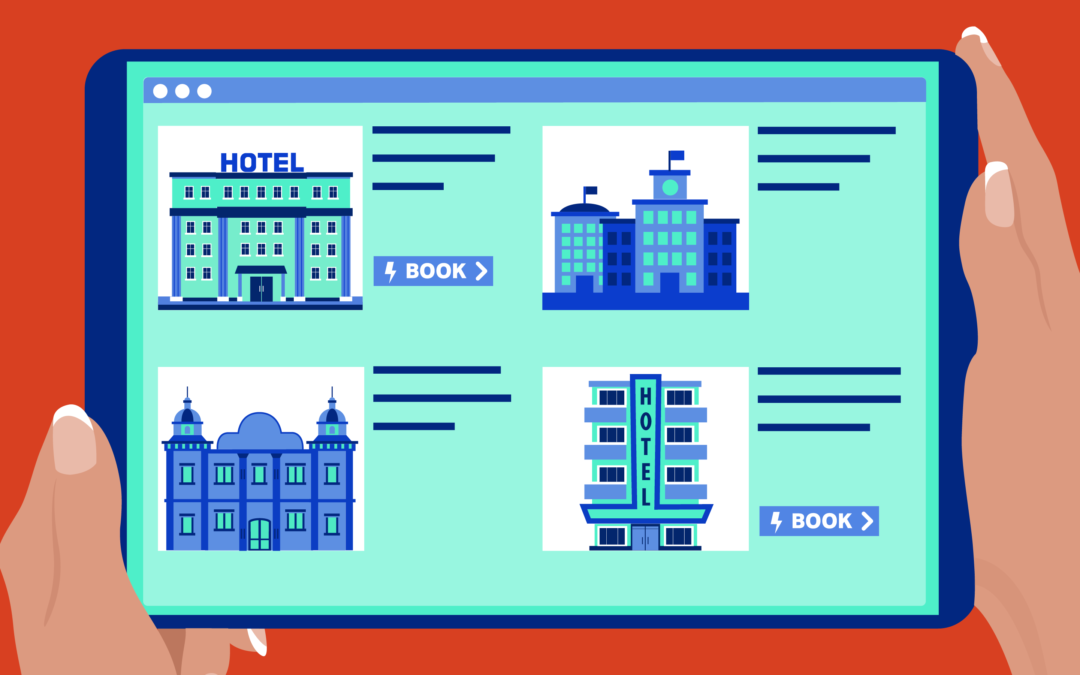
After a meeting planner creates a new group (rooms and space) event, they search for a participating property. Properties that have enabled direct booking will have a guest-room availability indicator and a Book Now button.
Once a planner has selected the property for direct booking, they choose the number of rooms they need per room type (up to nine rooms per room type) and add them to the booking cart.
Once a planner has added rooms to the shopping cart and finalized the room block, they can add meeting spaces from the property to the reservation. In this step, you can also add available amenities and catering options to the meeting space.
In the final step, meeting planners check out and pay via a secure payment gateway.
To learn more about setting up GroupSync Engage for your hotel, request a demo.
In an unusual year such as 2020, even the holiday shopping season is different.
Amazon Prime Day, which usually takes place in July, was postponed until October and kicked off a series of Black Friday sales that would have otherwise launched after Thanksgiving. As shoppers make the most of online sales, your hotel could easily and quickly get in on the action.
The solution? Offer vouchers or gift certificates for future use at your hotels.
A change of scenery
After long quarantines and stay-at-home orders, people everywhere have cabin fever. Many travelers may be anxious to get out of the house, but few want to travel far from home. They prefer to stay within their own city or head to a destination they can easily reach by car.
Creative-minded hotel executives are coming up with new services to entice these kinds of guests. With so many people working remotely, one package is the “work from hotel” day rate to give professionals a clean, safe option other than working from home.
For those looking for leisure, the staycation is one of the season’s biggest trends. It’s an easy way to take a break without too much time or expense. Staycation packages allow locals to enjoy a spa day or a pampered overnight stay. Hotels have plenty to offer with luxuries such as indoor pools, rooftop lounges with city views, and high-end dining.
A simple solution for online sales
Now is the perfect time to take advantage of the “workation” and staycation trends. Your amenities and services make great gifts for new and loyal customers to give to their loved ones, colleagues and clients.
Fun fact: Worldwide, nearly half of all voucher sales occur during November and December.
GroupSync Vouchers is an e-commerce solution that enables you to create, sell and manage the redemption of gift voucher packages for instant cash flow. Create packages including F&B, staycations, spa services, activities, cash value gift cards and more that you can sell on a hotel-branded website.
Benefits to your hotel:
Sell vouchers online for instant cashflow
Sell virtually anything, anytime, anywhere
Manage bulk and complementary vouchers
No technical skills required
Hotel branded voucher websites
Saves time and reduces numerous manual processes
Check out this example from Fairmont Singapore & Swissotel the Stamford. (Note that it’s a live site, so if you buy something, you’ll have to redeem it in Singapore!)
Take advantage of the holiday season to drive revenue for your hotel. Email us or request a demo to get started.
The most successful hotel sales managers and sales directors don’t wait until the end of a negotiation to close the sale. They’re working the close from day one.
Modern corporate event planners and other meeting professionals are savvy buyers who aren’t easily swayed by standard sales tactics. So, don’t stop viewing the close as a “make it or break it” moment. Provide value, grounded advice, and the right tools and reinforce your hotel’s unique assets, amenities and service culture throughout the entire sales process.
We turned to the Groups360 meeting advisors, who are responsible for hundreds of millions of dollars in group bookings, for their smartest closing secrets and tips for hotel sales teams.
Showcase what makes your property different
Consider this: Event planners see hundreds of properties every year. And even when they narrow in on a destination, it requires even more effort to differentiate between properties in the same city. After all, your hotel and those in your comp set may all start to look and sound the same.
That’s why it’s vital to stand out on every front — unique selling points, photos, copy, group offerings and more. Know your “It factor” and incorporate that into all of your sales and marketing efforts.
Demonstrate your remarkable staff culture
Event planners want a partner in meeting planning and a team that will execute their vision. That’s why your hotel’s service culture and how well you demonstrate it are vital to winning the business.
It’s one thing to proudly tout your staff and your high level of guest service. It’s another thing to actually prove it.
During our tenure at Gaylord Hotels, many assumed our It factor was soaring atriums and remarkable meeting space. But the truth was that many of our competitors also offered grand venue options. So, we dug deeper and found that our true differentiator was our acclaimed service culture and commitment to flawless execution.
To demonstrate this, we spent less time pointing out our high ceilings and more time in the back of the house where the event planner could see our team members working together to make our clients shine.
Never lose sight of your comp set
With all the tactics and monitoring tools at your disposal, you should never be surprised when a nearby hotel outperforms yours. Savvy hotel sales teams proactively seek key insights into their competition to see what offers they’re running and how well they are succeeding.
How do they position their meeting space and offers? What’s their sales message? How do they provide service to meeting and event planners in ways that you don’t? What about the product itself — do their meeting experiences outshine yours?
Finally, the most important question: What can your hotel sales team do to outperform and outshine the rest?
When you understand your competitors, you can better anticipate their performance, as well as yours. All this will help you achieve your room-night goals and more group revenue.
Advise, don’t pressure
Meeting and event planners are savvy businesspeople who don’t respond to the standard pressure tactics. They want a partner and an advisor who understands their goals and is going to help them reach those goals. Become a trusted meeting advisor and their personal destination expert.
If they need an intimate off-site dinner venue or team-building activities, send tailored recommendations with their attendees and unique objectives in mind. Don’t just send a link to your DMO. Always offer value, insight and thoughtful suggestions.
Think like an event planner
This closing secret is most vital: Understand what meeting and event planners want and need to ease any complications in the sourcing process. Then, show the event planner you understand what success means to them and that you and your team are prepared to deliver.
Respond quickly (within hours, not days) to their RFPs and questions, but don’t sacrifice detail and thoughtful review just in the interest of saving time. Offer the right tools and assets to help them visualize their event at your venue, including images of previous events, 360-degree virtual/live video tours (vital for meeting planners unable to conduct site visits), and customized floor plans that show their configurations. Organize site inspections around their needs, not yours.
Every interaction should work toward the event planner’s meeting objectives, not your hotel’s room-night goals.
When the pandemic hit, the effect on travel and live events was swift, and the fallout across the hospitality industry has been acute. Certain small and agile software startups, however, have been able to swiftly pivot to a new business model or seize upon opportunities made ripe by current circumstances.
Such was the case for IDEM Hospitality (now part of Groups360), software creators whose group housing technology increases revenue opportunities for hoteliers and reduces workloads for meeting planners.
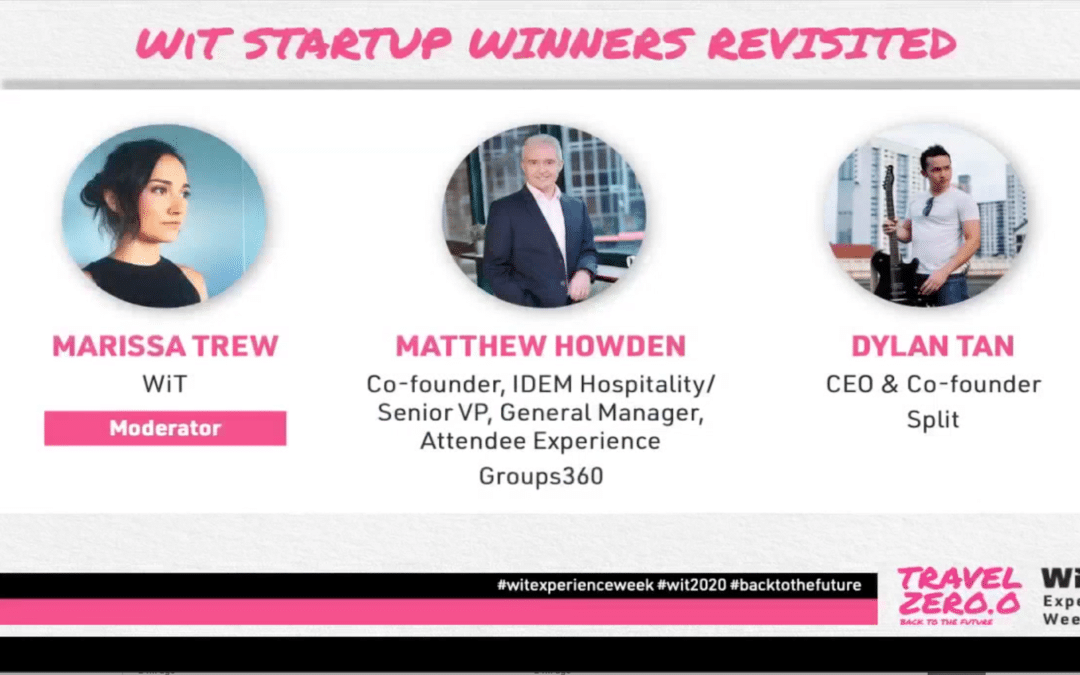
Matthew Howden, senior vice president and general manager, attendee management solutions, for Groups360 is cofounder and former joint CEO of IDEM. During the last week of September 2020, Matthew was a featured speaker at WiT Experience Week, a unique global travel conference by Web in Travel (WiT) that was live-streamed from Singapore.
In 2019, IDEM Hospitality was the WiT Startup of the Year. In this online interview, Matthew joined Dylan Tan, CEO of Split, the 2018 WiT Startup of the Year winner, to revisit their companies’ trajectories since their wins and how they’ve been faring through the pandemic.
Below are highlights from Matthew’s contributions to the conversation, and you can also watch the 15-minute interview in full to hear from both panelists.
How did your business respond when COVID-19 first hit?
At the time, we were offering online booking technology for meetings and events, and we saw reservations fall from our hotel customers drastically. In a matter of weeks, it went from 10,000 or more a month to virtually zero overnight. So, we went out and talked to our customers to come up with concepts and ideas. How can we help them generate money?
We started by creating “staycation” solutions to drive a bit of demand to their hotels. We saw some good pickup — large corporations were onboarding their private-label staycation booking websites. But then COVID got worse and the bottom fell out of that as well.
So again, we went back to the customers. They said they were looking for a solution to sell vouchers or gift certificates to drive demand today and be able to produce that later in the year. I knew what the product was because I had bought one from Banyan Tree, which was a unbelievable staycation. Now, in our system today, we have a proprietary upsell solution that allows hotels to sell packages to group guests.
We pivoted with that and expanded on that solution to allow guests to buy a voucher for a product — staycations, F&B, spa, etc. I recently saw one of our hotels put up “mumcations,” which are pretty cool and they’re going great guns right now. It’s fantastic.
You have also been busy with an acquisition. Tell us how that deal came about.
In June 2019, we were introduced to the guys at Groups360 by the Accor team. We ended up meeting Groups360 executives at the 2019 HITEC conference in Minneapolis, and we just hit it off.
Groups360 created GroupSync to simplify searching, sourcing, and booking guest rooms and meeting space for hotels and event planners. We had a product to simplify group reservations for meetings and events. So, we saw opportunities for a partnership, and partnership discussions turned into acquisition discussions later that October.
We were meant to close the deal in March 2020. And then COVID hit. It certainly took the wind out of everyone’s sails, but it didn’t affect the deal. We just slowed down a bit. We continued the discussions and kept moving, but the lull in business gave us a bit of breathing space.
Aside from your successes, were there any points of error?
Frankly, I’m happy to say this time has been great for us. We’ve been able to sit back and plan, build, and compile our solutions, work on integrations between products, and maximize our contribution to the industry’s recovery as we come out of COVID.
Do you have any advice for startups trying to fundraise or pivot?
First, I would say I feel for you. One assumes you’ve already got your costs under control, which is a key metric right now. But it’s critical you keep talking to your customers and get feedback on what they’re doing. Listen to them and identify some of the challenges they’re going through now. This is what helped us. Where there are challenges, there are opportunities.
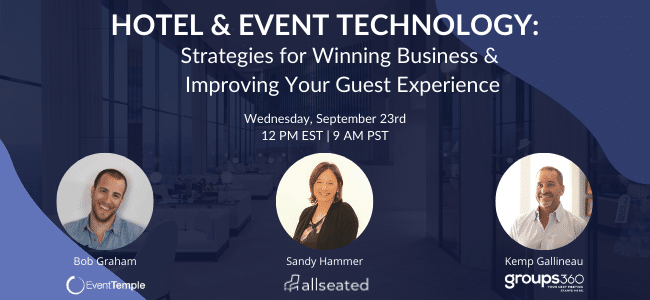
The webinar featured insightful conversation about emerging hotel and event technology, as well as strategies hoteliers can implement to evaluate their current technology stack, win more group business, and improve the guest experience as the industry transitions into recovery from the pandemic.
Below are highlights from Kemp Gallineau’s contributions to the conversation, and you can also watch the webinar in full to hear wisdom and insights from the entire panel.
Tell us more about Groups360.
Our company has been hard at it for the last six years. We focused our original couple of years on the group sourcing and shopping process and moved this year into the ability for planners to direct book both guest rooms and meeting space. We understand that we have to support both the planner and the supplier. And we’re trying to make it easy for both sides of the marketplace to communicate in a way that simplifies the booking process. So, we’re excited to be part of this industry and hopefully we’ll be part of how we come back post-pandemic.
In the current climate, what trends are you seeing with your clientele and in the industry in general?
In the industry and more broadly, across the world, the financial implications of the pandemic have been deep. Given the amount of workforce that’s been furloughed or laid off, people are looking for solutions that can allow them to come back and do business differently. A lot of people in our industry are starting to return, and the major brands are beginning to bring their workforce back. And the question for them really is how can I do more with less? What tools will ensure that my customer is taken care of in a way that they were used to in the past? But also how can I take better care of them moving into the future?
When you look at the role of technology, we have to make it easy for hoteliers to use, as complex as a task may be on the back end. We are staying hyperfocused on getting the planner customer and the hotel salesperson to talk in the most efficient way and on providing them with the things they need to have trust and confidence to transact business in e-commerce.
That’s why I think there’s going to be a lot more dependency on technology. And to some degree, as much as I hate to say it, our industry lacks imagination at times to be able to solve these problems. That’s the beauty of the people on this webinar and their companies — we’re trying to attack the problem in front of us.
How can hoteliers leverage technology to win more business and improve the overall guest experience?
The key thing here is trust and confidence — how do we get both sides of the equation comfortable with using technology to create great relationships? As someone pointed out earlier, this pandemic has forced people to consider their businesses from a different perspective. And I would argue that the meeting side of hotels only transacted business the way we wanted it to be on the supplier side.
We have to listen to the customer and truly understand what it’s going to take for planners to book a meeting or event, whether it’s hybrid, virtual or on property. Those hotels and brands that will succeed will be those that adopt available technologies to create that trust and confidence to do business. They’ll enable a planner to say, “I can book this online, because I have the content I need to make a great decision.”
Hotel content will be king. How I present it, what reports I can run, what information I have available, what inventories are made available all will give me a lot of confidence in the technology I’m using to further that relationship with planner customers.
And as someone said earlier, it’s not necessarily a replacement, it’s an enhancement. We need to enhance our relationships — we need to empower our consumer along with the hotel salesperson so that we’re at a better place. And we continue to foster evolution and quite honestly a revolutionary perspective on the way we do meetings and events, pre-COVID and the way we come out post-COVID.
What does the future of hospitality look like in a post-COVID world?
I think the future is about choice. It’s about empowering the customer — whether they want a hybrid meeting, a full-on attendee meeting, or a virtual meeting — to have choice based on their needs. To be able to do that, we have to expose data we haven’t exposed before. The secret sauce that everyone thinks they’re holding close to the vest, they need to expose. Hotels need to empower customers and their sales organizations to have different conversations.
When a planner talks to a hotel salesperson, the salesperson usually asks the same question: “Tell me about your last meeting.” If you believe that 90 percent of meetings are a repeat, that’s not the best question we could ask to show that we understand the customer. Technology will help us be able to say, “Here’s what you’ve done in the past, and here’s what we suggest in the future.” Or, “Here are other people who do similar things as you. And here’s what you should consider, based on the size and location of your meeting.”
We should be able to help people do their jobs. And I think technology is going to empower people to work on a lot of great things. And I also think the future will be one ecosystem, which will make it easy for a planner to go through the whole meeting process in one ecosystem.
Lastly, there’s the issue of behavior change. How do we enable those behaviors that make this process highly effective and efficient? It’s different from just throwing technology at it, right? What we’re all doing and what we’ve talked a lot about is understanding the behavior of what it takes to come out of this pandemic, in a way that’s fruitful for the planner and also for the supply side of our business.
Everyone has talked about transparency of information to enable decisions. What is the key piece of information your customers are looking for?
It’s inventory. How can I spend less time broadcasting an RFP only to find out that 90 percent of the hotels don’t have rooms or space on my set of dates? Transparency in inventory and availability will provide a huge piece to eliminating a lot of unnecessary work that both sides do. The planner has to send the RFP, and the hotel has to respond to it.
I think the planner’s minimal expectation in the years to come will be: “I should be able to see inventory of rooms and space. I should be able to understand a range of pricing, if not exact pricing. And I should have the option to book now, if I have the confidence and ability to make that booking at that point in time.”
What has the crisis taught you about yourself, your leadership and your business?
Personally, I think it’s listening to what’s happening in the industry. When the world’s going well, our technology company runs so fast that sometimes we don’t listen the way we should. We’re creating technology to help the industry, but we’re also a business that needs to make money. And it’s heart-breaking to watch people you’ve known for 25 years be so negatively impacted. How can I as a company and as a person help them to create jobs or bring back the industry faster?
It’s those things that keep you up at night and make you think, “Am I doing the right things? Am I doing it fast enough? Is there something we missed?” I think all those things are what drive great companies to provide much needed solutions.
Lastly, you have to have the right people on your team. Crises pull everyone to do more with less. But certain things will come up, and you have to trust your people as much as you did when you hired them. We’re fortunate to have great people on the team at Groups360. The current crisis has brought us closer but also made us run faster. It’s our industry, and I hope we can help it come back in a way that’s brighter than it was before the pandemic.
We and our partners use cookies on our websites to enhance your experience by remembering your preferences, personalizing content, and analyzing performance and traffic on our websites. We also share information about your use of our websites with our advertising and analytics partners. For more information on our use of cookies and information about your use of our website, please see our Cookie Notice . You can also manage your cookie choices by visiting Cookie Settings.
When you visit our websites, we store cookies on your browser to collect information about you, your preferences, or your device in order to make the site work as you expect it to and to provide a more personalized web experience. You can choose not to allow certain types of cookies, but they may impact your experience on our website and the services we are able to offer. Click on the different category headings to find out more about the different kinds of cookies we use. If you like, you can change our default settings according to your preference. However, you cannot opt-out of our Necessary cookies as they are deployed in order to ensure the proper functioning of our website (such as, prompting the cookie banner and remembering your settings, allowing you to log into your account, and redirecting you when you log out, etc.). For more information about the cookies we use and to change your default settings, see below.
These cookies are necessary for our Services to function and cannot be switched off in our systems. They are usually only set in response to actions made by you which amount to a request for services, such as setting your privacy preferences, logging in or filling in forms. You can set your browser to block or alert you about these cookies, but as a result, some parts of the site may not work.
We use advertisement cookies to facilitate content-sharing and engagement in order to improve your experience. They are also capable of identifying your browser across other sites and adapting the content and messages you see on other websites you visit according to your profile.
We use functional cookies to enable the website to provide enhanced functionality and personalization. They may be set by us or by third party providers whose services we have added to our pages. If you do not allow these cookies, then some or all of these services may not function properly.
We use analytics cookies to help us improve our website by collecting and reporting information on how you use it. Analytics cookies allow us to gather information such as which pages on our websites are the most popular, the websites from which users arrive, or users’ browsing patterns on our website. These cookies collect information in an aggregated form.